Client & School Background
The client is a large public secondary school located in Kiambu County, approximately 20 kilometres north of Nairobi. The school has a population of 2,000 students, 80 teaching and non‑teaching staff, and is a boarding institution with extensive dormitories, classrooms, a kitchen, and sports facilities.
Prior to this project, the school relied on municipal water from the Kiambu County water supply. However, the supply was intermittent—often failing during dry seasons or when the infrastructure was under strain—leaving the school without water for days at a time. This severely affected daily operations: students had to queue for long hours at limited water points, sanitation suffered, kitchen operations were disrupted, and the school's vegetable garden could not be maintained.
Project requirements:
- Reliable water supply for 2,000 students and 80 staff (drinking, cooking, sanitation).
- Peak flow capacity of at least 8 m³/hr.
- High‑quality water suitable for drinking and food preparation.
- Low‑maintenance, easy‑to‑operate system suitable for a school environment.
- Full compliance with WRA, NEMA, and county government regulations.
- Educational integration – the school wanted the project to serve as a learning resource for students.
The Challenge
Kiambu's geology is a mix of volcanic rocks and weathered basement systems. While the area has good groundwater potential, the depth and yield of aquifers can be unpredictable. Additionally, working in a busy school environment required careful planning to avoid disrupting classes and ensure student safety.
The specific challenges included:
- Hard rock drilling – the area is underlain by volcanic formations (trachytes and basalts) that are hard and require heavy‑duty DTH equipment.
- Depth uncertainty – surveys suggested the productive zone might be between 150 and 220 meters.
- Safety concerns – the drilling site was close to classrooms and dormitories, requiring strict safety protocols and noise management.
- Student engagement – the school wanted to involve students in the project as an educational opportunity, which required careful coordination.
- Regulatory compliance – full WRA permit and NEMA EIA were required, with a focus on protecting the school's groundwater resources.
Despite these challenges, WaterLink Limited's experience with institutional projects gave the school confidence that we could deliver a reliable, safe, and educational solution.
Survey & Planning
Our team conducted a thorough site assessment:
- Desk study – reviewed geological maps and groundwater data for the Kiambu area.
- Hydrogeological survey – used electrical resistivity tomography (ERT) to identify potential aquifer zones and estimate depths. The survey indicated a promising zone between 180 and 210 meters.
- Geophysical logging – confirmed the presence of water‑bearing fractures and assessed water quality.
- Environmental Impact Assessment (EIA) – prepared by our environmental consultants, addressing potential impacts on the school environment and community.
- WRA permit application – submitted with detailed technical documentation and an abstraction plan suitable for institutional use.
- Safety and logistics plan – developed to ensure the safety of students and staff, including scheduling drilling during school holidays whenever possible.
Based on the survey, we set a target depth of 200 meters and selected a drilling location away from classrooms to minimise disruption.
The Drilling Process
With permits in hand, our team mobilised to the school. The project was executed in the following phases:
Phase 1: Setup and Preparation
- Site preparation with safety barriers and signage.
- Installation of the drilling rig and support equipment.
- Safety briefings for school staff and students.
- Drilling of a pilot hole to 50 meters to assess formation stability.
Phase 2: Drilling to Target Depth
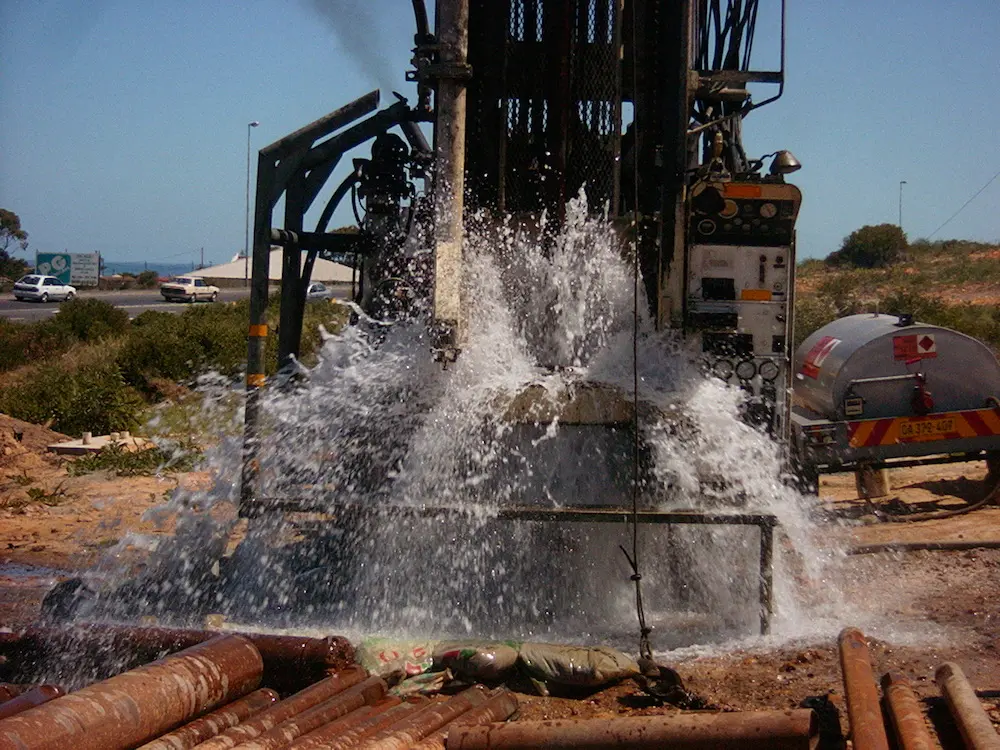
- We used a DTH (down‑the‑hole) hammer drilling technique, which is effective in hard volcanic rock.
- At 180 meters, we encountered a fractured zone with a significant increase in water inflow.
- We continued drilling to 200 meters to ensure we had fully penetrated the productive zone.
- Total drilling time: 8 days.
Phase 3: Development and Testing
- After reaching 200 meters, we developed the borehole to remove drilling debris and fine particles.
- A step‑drawdown pumping test was conducted to determine the optimal pumping rate and confirm the yield.
- Water samples were sent to a certified laboratory for comprehensive analysis, with a focus on drinking water quality.
System Design & Water Treatment
The water quality analysis showed excellent results: pH 7.3, TDS 260 mg/L, hardness 115 mg/L, and no bacterial contamination. This allowed us to design a simple, cost‑effective treatment system.
The complete water system for the school included:
- Sediment filtration – a multi‑stage filter to remove any sand or suspended solids.
- UV disinfection – a UV steriliser to ensure microbiological safety for drinking water.
- Chlorination unit – a simple chlorine dosing system for residual disinfection in the storage tank.
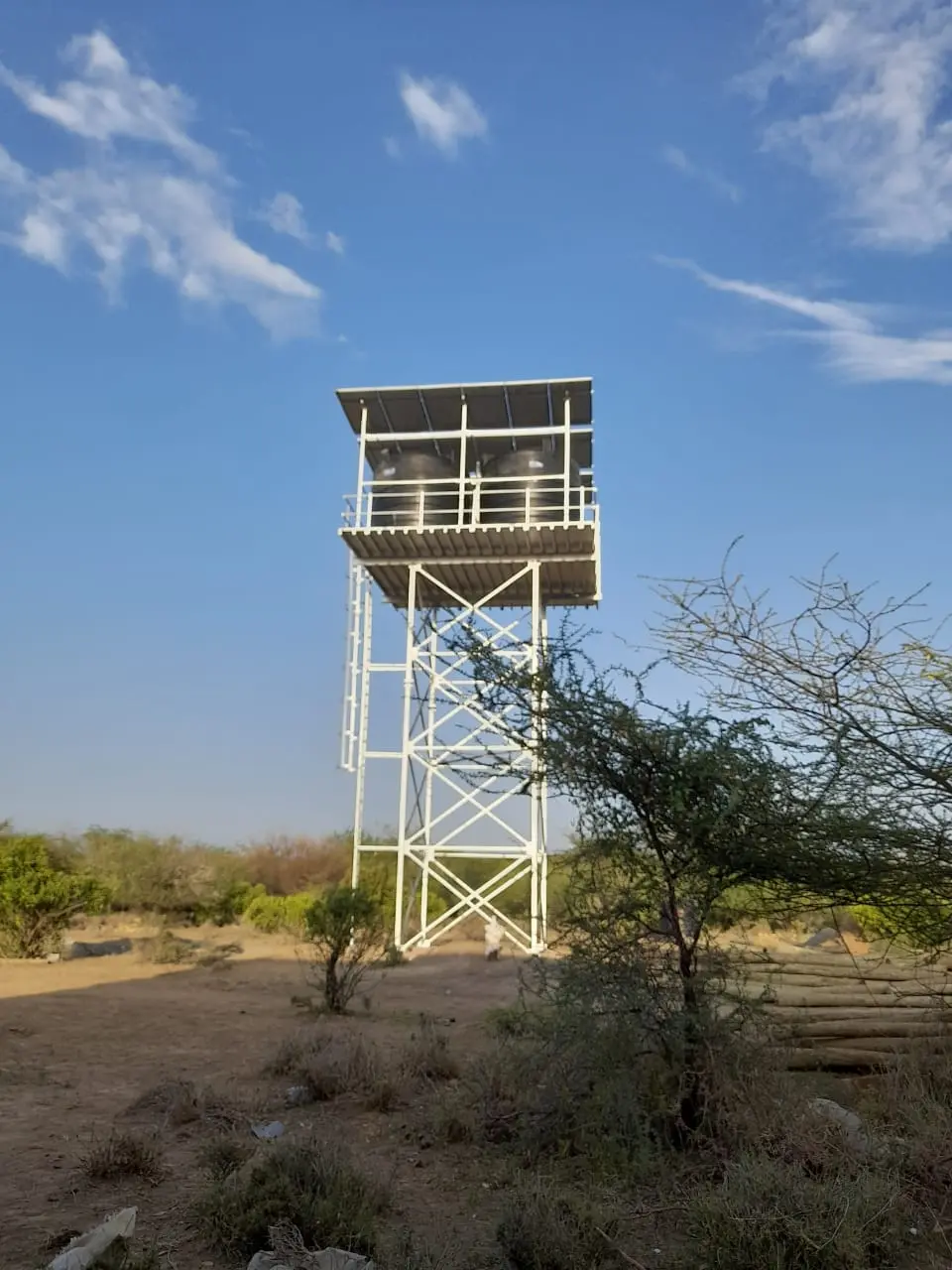
- Storage and distribution – a 40,000‑litre elevated storage tank with a gravity‑fed distribution system to ensure consistent pressure across the school.
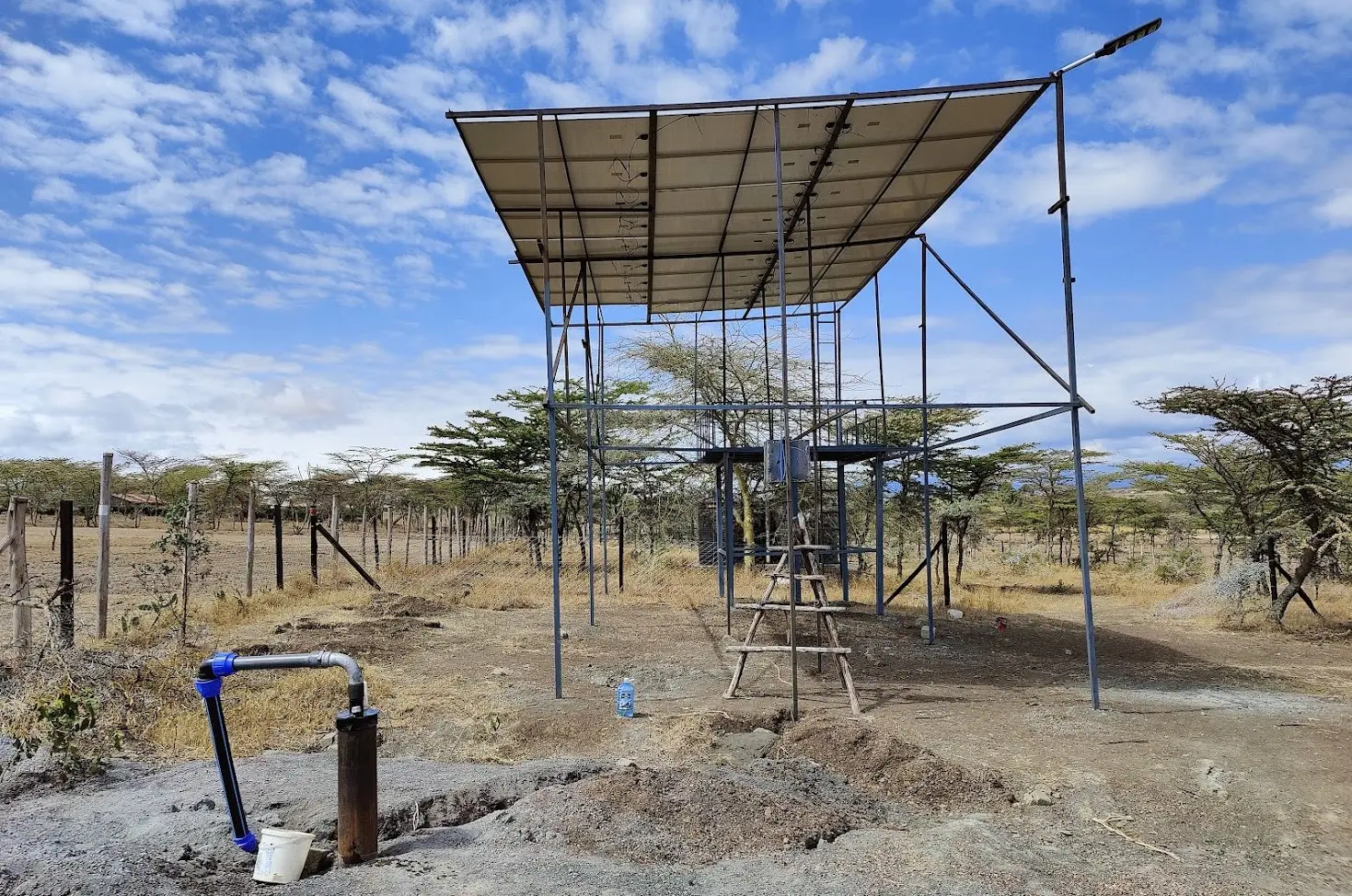
- Solar pumping system – a 4 kW solar array with battery backup to reduce operational costs and provide reliable power.
- Educational display – an information board explaining the system's operation, installed near the borehole for student learning.
The system was designed to be simple enough for school staff to operate and maintain, with training provided by our team.
Completion & Pump Installation
With the pumping test confirming a sustainable yield, we proceeded with the completion:
- Casing – 6‑inch steel casing from the surface to 50 meters, followed by 4‑inch uPVC casing and screen from 50 to 200 meters.
- Gravel pack – carefully graded gravel placed around the screen to ensure proper filtration.
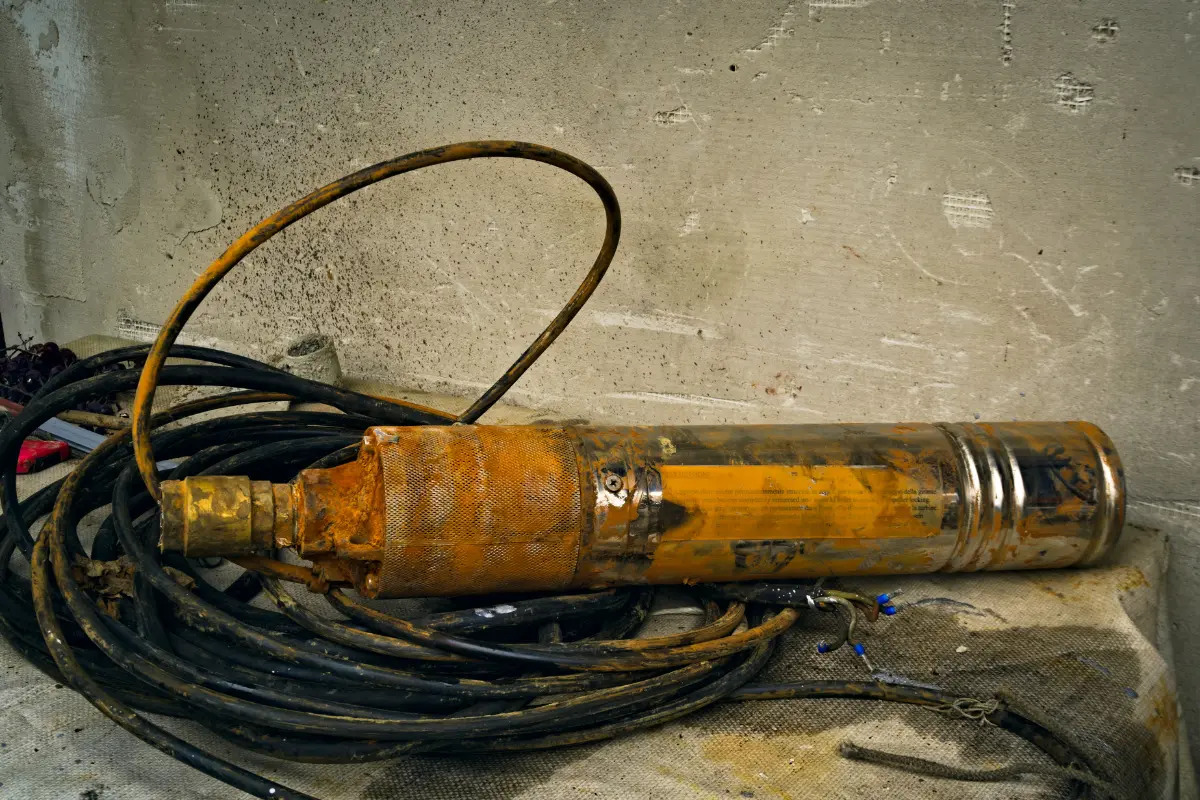
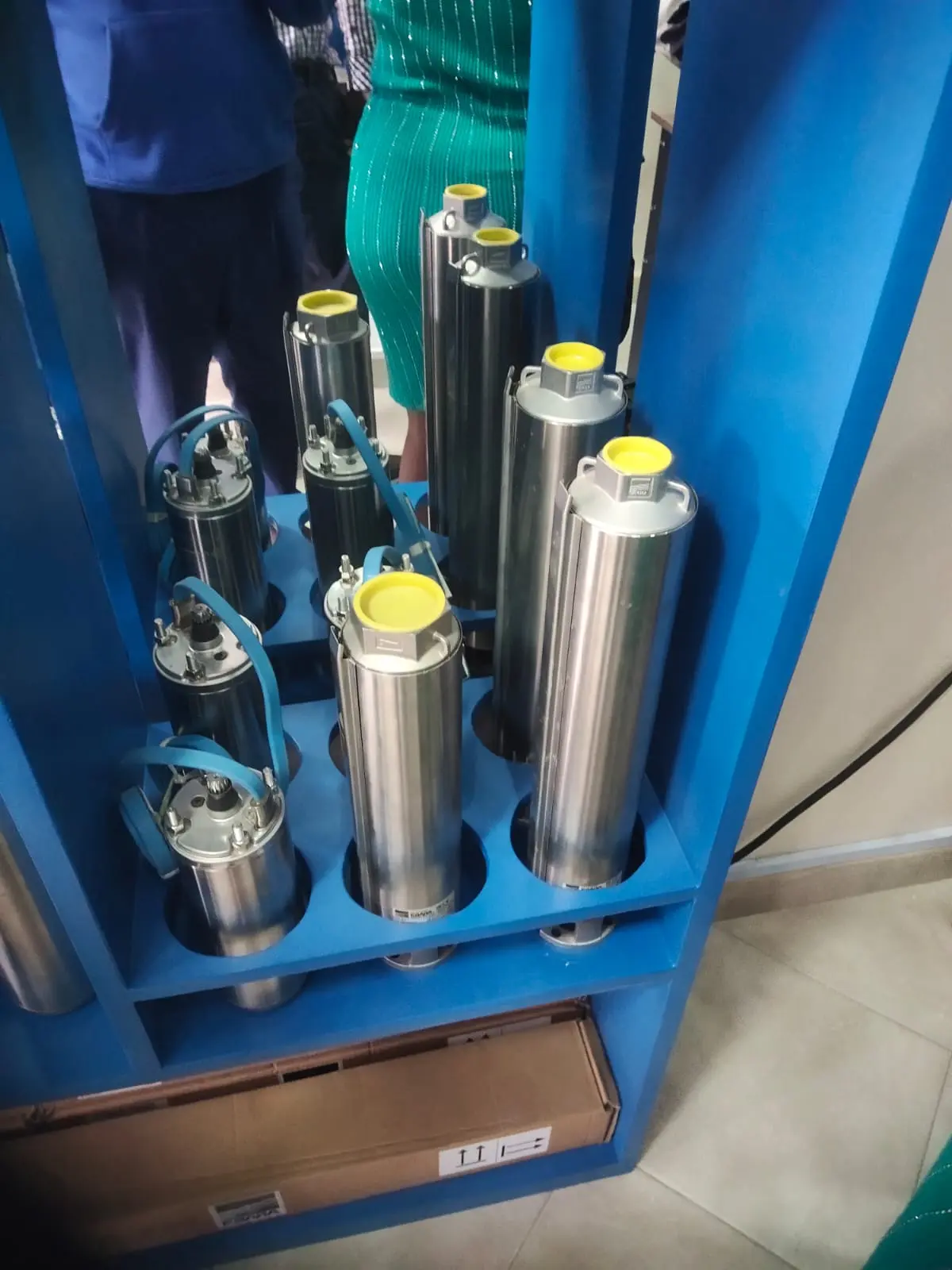
- Pump selection – a 7.5 HP submersible pump with a stainless steel impeller, capable of delivering 10 m³/hr at the required head.
- Variable Frequency Drive (VFD) – to optimise pump speed and energy consumption based on real‑time demand.
- Solar power integration – the solar panels and battery system were installed to power the pump, significantly reducing the school's electricity costs.
- Site restoration – the drilling area was restored and landscaped to blend with the school's environment.
The installation was completed within 5 days of the drilling finishing.
Results & Performance
The borehole exceeded all performance targets:
- Depth: 200 meters
- Static water level: 40 meters
- Pumping water level: 130 meters at 10 m³/hr
- Yield: 10 m³/hr (well above the 8 m³/hr requirement)
- Water quality: Excellent – met all WHO drinking water guidelines with simple filtration and disinfection.
- Drawdown: 90 meters at peak pumping rate, indicating a productive aquifer.
- Uptime: 100% since installation, with solar power ensuring operation even during grid outages.
The borehole now provides the school with a reliable, high‑quality water supply 24/7, ending the era of water shortages.
Student & Community Impact
The borehole has transformed life at the school:
- Improved health – clean water has reduced the incidence of water‑borne diseases, improving student attendance and well‑being.
- Better sanitation – toilets and handwashing stations now have a reliable water supply, improving hygiene and dignity.
- Nutritional improvements – the school kitchen can now prepare meals without disruption, and the vegetable garden is thriving, providing fresh produce for the students.
- Learning opportunities – the borehole has become a learning resource for science classes, with students learning about groundwater, water treatment, and renewable energy.
- Community benefits – the school has extended water access to the neighbouring community, strengthening its role as a community hub.
- Reduced costs – the school no longer pays for water trucking or high municipal bills, saving approximately KES 100,000 per month.
The project has been a catalyst for broader improvements in the school and the surrounding community.
Lessons Learned
This project highlighted several key insights:
- Engaging the school community is essential – involving students and staff from the start built excitement and ownership.
- Solar power is a smart choice for schools – the solar system significantly reduces operational costs and provides reliable power, making it ideal for institutions with limited budgets.
- Education integration adds value – the borehole became a teaching tool, enhancing the project's impact beyond water supply.
- Safety must be prioritised – working in a school environment requires strict safety protocols and good communication with staff and students.
- Partnerships amplify impact – collaboration with the school board, parents, and county officials ensured the project was well‑supported and sustainable.
Client Feedback
"This borehole has been a blessing for our school. We used to worry every day about water, and now we have a reliable supply that serves all our 2,000 students. The water is clean, the system is easy to manage, and the solar power means we don't have to worry about electricity bills. Our students are healthier, our garden is flourishing, and we have even been able to help our neighbours. Thank you, WaterLink Limited."
– School Principal, Kiambu
Key Project Metrics
| Metric | Value |
|---|---|
| Location | Kiambu County, Kenya |
| Institution type | Public secondary school |
| Students served | 2,000 |
| Staff served | 80 |
| Borehole depth | 200 meters |
| Target yield | 8 m³/hr |
| Achieved yield | 10 m³/hr |
| Static water level | 40 meters |
| Pumping water level | 130 meters |
| Drawdown | 90 meters |
| Water quality (TDS) | 260 mg/L |
| Pump size | 7.5 HP submersible |
| Solar array | 4 kW |
| Storage capacity | 40,000 litres |
| Monthly savings (water trucking avoided) | KES 100,000 |
| Project duration | 13 working days |