Client & Project Background
The client, a property owner in the prestigious Karen area of Nairobi, was facing persistent water shortages. The municipal water supply was unreliable, and trucking water in was becoming increasingly expensive and inconvenient. The client needed a sustainable, long‑term water solution for their large residential property, which included extensive gardens and a small farm.
Initial estimates suggested that a borehole of at least 120–150 meters would be required, but a preliminary assessment by other contractors indicated that deeper drilling might be necessary due to the local geology. The client approached WaterLink Limited for a comprehensive solution.
Client requirements:
- Reliable water supply for domestic use (5–6 occupants).
- Water for garden irrigation and a small vegetable farm.
- System capable of delivering at least 8–10 m³/hr.
- Long‑term reliability with low maintenance.
- Full compliance with WRA and NEMA regulations.
The Challenge
The Karen area is underlain by volcanic formations—primarily trachytes, phonolites, and basalts. While these rocks can provide excellent groundwater, they are notoriously hard and can be fractured, making drilling challenging. Other contractors had warned the client that the geology was "difficult" and that there was no guarantee of water at shallower depths.
The specific challenges included:
- Hard rock formations – drilling through volcanic rock requires powerful equipment and can be slow, increasing costs.
- Fractured zones – while fractures can carry water, they can also cause drilling fluid losses and borehole instability.
- Depth uncertainty – there was no guarantee of water at 150 meters; the aquifer might be deeper.
- Access constraints – the property had limited access, restricting the size of equipment that could be mobilised.
- Regulatory requirements – full WRA and NEMA compliance was required, including a detailed Environmental Impact Assessment.
Despite these challenges, the client was committed to a permanent solution and chose WaterLink Limited for our reputation in handling complex projects.
Survey & Planning
Our team of hydrogeologists conducted a comprehensive site assessment, which included:
- Desk study – reviewing geological maps and existing data for the Karen area.
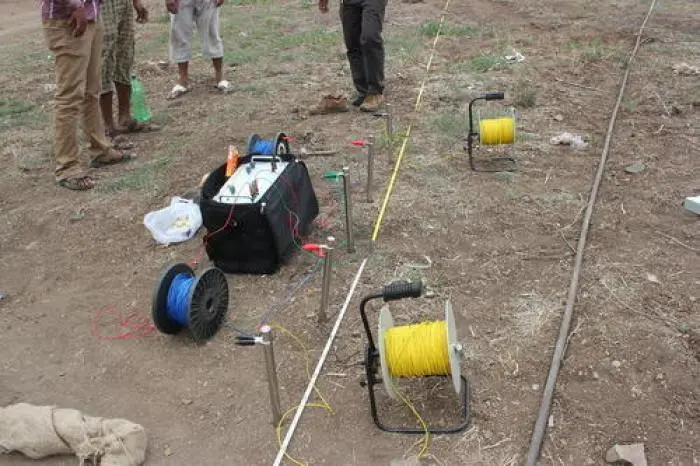
- Hydrogeological survey – using electrical resistivity tomography (ERT) to identify potential aquifer zones and estimate depths.
- Geophysical logging – to confirm the presence of water‑bearing fractures and assess water quality.
- Environmental Impact Assessment (EIA) – prepared by our environmental consultants to ensure NEMA compliance.
- WRA permit application – submitted with all technical documentation.
The survey indicated that the most promising aquifer was likely to be found between 250 and 320 meters. The client approved the plan, and we set a target depth of 300 meters.
The Drilling Process
With permits in hand, our drilling team mobilised to the site. The project was executed in the following phases:
Phase 1: Setup and Preparation
- Site preparation and safety briefings.
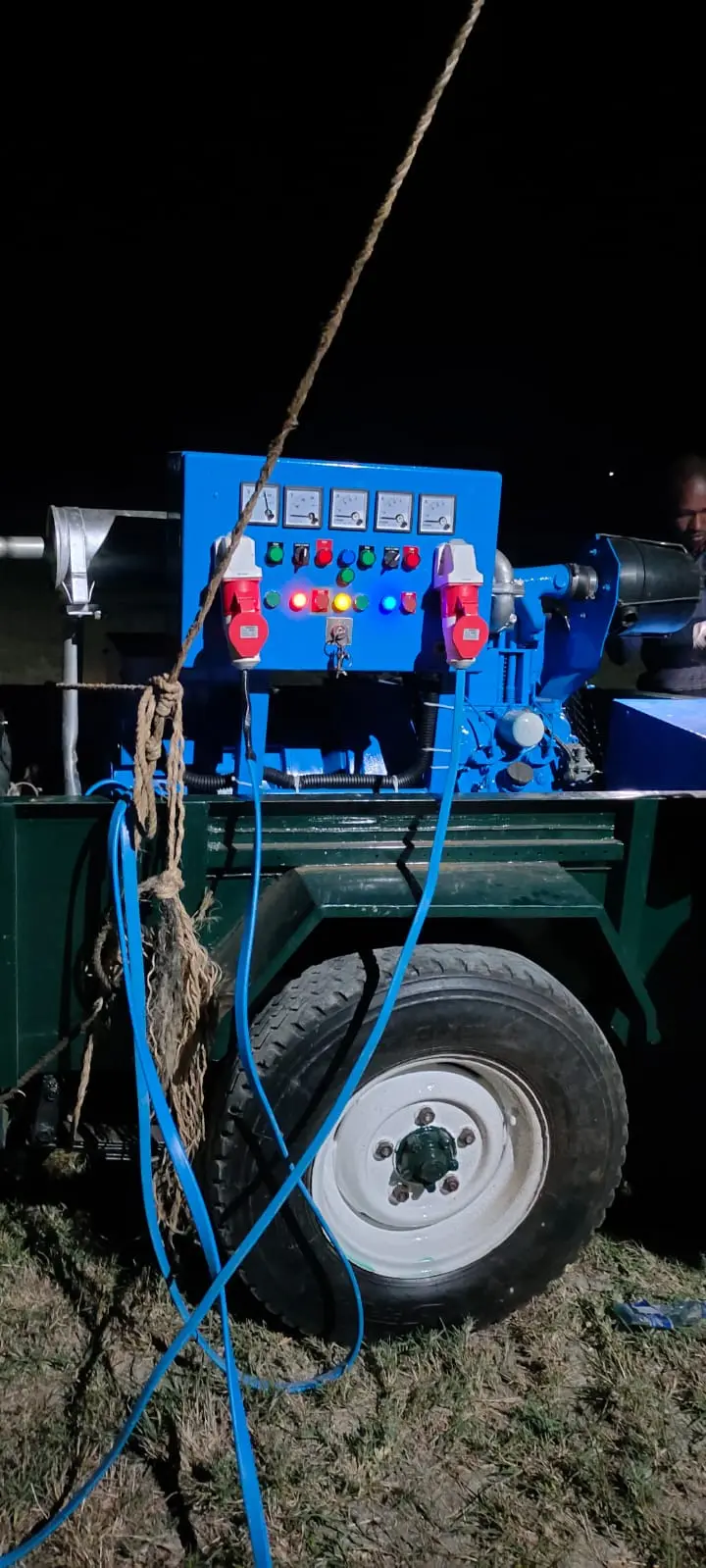
- Installation of the drilling rig and auxiliary equipment.
- Drilling of a pilot hole to 50 meters to assess formation stability.
Phase 2: Drilling to Target Depth
- We used a DTH (down‑the‑hole) hammer drilling technique, which is effective in hard volcanic rock.
- Drilling progress was monitored continuously, with frequent water level checks.
- At 280 meters, we encountered a fractured zone that produced a significant increase in water inflow.
- We continued drilling to 300 meters to ensure we had fully penetrated the productive zone.
- Total drilling time: 9 days.
Phase 3: Development and Testing
- After reaching 300 meters, we conducted a thorough development of the borehole to remove drilling debris and fine particles.
- A step‑drawdown pumping test was performed to determine the optimal pumping rate and confirm the yield.
- Water samples were collected for laboratory analysis.
Completion & Pump Installation
With the pumping test confirming a sustainable yield, we proceeded with the completion:
- Casing – we installed 6‑inch steel casing from the surface to 50 meters to stabilise the upper section, followed by 4‑inch uPVC casing and screen from 50 to 300 meters.
- Gravel pack – carefully graded gravel was placed around the screen to filter out fine particles.
- Pump selection – based on the test data, we installed a 15 HP submersible pump with a stainless steel impeller, capable of delivering 15 m³/hr at the required head.
- Pressure tank and controls – a 1,000‑litre pressure tank and a fully automated control panel were installed to ensure consistent water pressure.
- Electrical connection – the system was connected to the property's mains supply with surge protection.
The entire installation was completed within 5 days of the drilling finishing.
Results & Performance
The results exceeded the client's expectations:
- Depth: 300 meters
- Static water level: 45 meters
- Pumping water level: 180 meters at 15 m³/hr
- Yield: 15 m³/hr (comfortably exceeding the 10 m³/hr requirement)
- Water quality: Excellent – pH 7.2, TDS 280 mg/L, no bacterial contamination, suitable for domestic use without treatment.
- Drawdown: 135 meters at peak pumping rate, indicating a productive aquifer.
The client now has a reliable, 24/7 water supply that meets all their domestic and irrigation needs. The annual maintenance costs are projected to be low, and the system is expected to last for 15–20 years with proper care.
Lessons Learned
This project highlighted several key insights:
- Thorough survey is essential – despite the challenging geology, the hydrogeological survey accurately predicted the depth and location of the productive zone.
- DTH drilling is effective in volcanic rock – although slower than mud rotary in softer formations, DTH provided the penetration needed to reach 300 meters.
- Flexibility in depth – being prepared to drill deeper than initial estimates can be critical in areas with complex geology.
- Expertise matters – our experienced team was able to adjust drilling parameters in real time to manage fractured zones and fluid losses.
- Client communication – keeping the client informed throughout the project built trust and ensured satisfaction with the outcome.
Client Feedback
"We had been struggling with water for years. WaterLink Limited delivered exactly what they promised—a reliable, high‑yield borehole that has transformed our property. The team was professional, the communication was excellent, and the project was completed on time. We highly recommend their services."
– Karen Property Owner
Key Project Metrics
| Metric | Value |
|---|---|
| Location | Karen, Nairobi |
| Borehole depth | 300 meters |
| Target yield | 10 m³/hr |
| Achieved yield | 15 m³/hr |
| Static water level | 45 meters |
| Pumping water level | 180 meters |
| Drawdown | 135 meters |
| Water quality (TDS) | 280 mg/L |
| Pump size | 15 HP submersible |
| Project duration | 14 working days |