Client & Project Background
In the dry, semi‑arid region of Kajiado County, a community of approximately 2,500 people had long struggled with water scarcity. The community relied on a seasonal river that often dried up during prolonged droughts, and women and children walked several kilometres each day to fetch water from distant, often contaminated sources. The lack of reliable water affected health, education, and economic opportunities.
The community, represented by a local water committee and supported by a non‑governmental organisation (NGO), approached WaterLink Limited to design and drill a borehole that would provide a sustainable, year‑round water supply. The project was funded through a partnership between the community, the NGO, and a county government water programme.
Project requirements:
- Reliable water supply for 2,500 people for domestic use (drinking, cooking, washing).
- Water for livestock (cattle, goats, sheep) to support the community's pastoralist livelihood.
- Sufficient yield for a small community irrigation scheme to grow vegetables.
- Durable infrastructure that can be managed and maintained by the community.
- Full compliance with WRA, NEMA, and county government regulations.
The Challenge
Kajiado County's geology is complex, with a mix of volcanic rocks, sedimentary deposits, and ancient weathered zones. The area experiences erratic rainfall, and groundwater levels can be deep and variable. Previous attempts by other contractors had resulted in low‑yield or dry boreholes, leaving the community sceptical.
The specific challenges included:
- Unpredictable aquifer depth – no guarantee of water at shallower depths; surveys suggested the productive zone might be between 180 and 250 meters.
- Hard rock and fractured zones – drilling through volcanic rock required robust equipment and careful management of fluid losses.
- Access and logistics – the site was remote, with limited road access, making equipment mobilisation challenging.
- Community expectations – the community had high hopes and needed a reliable solution after years of disappointment.
- Regulatory compliance – full WRA permit and NEMA EIA were required, along with county government approvals.
Despite these challenges, WaterLink Limited was confident in our ability to deliver a successful borehole, based on our extensive experience in similar conditions across Kenya.
Survey & Planning
Our team conducted a thorough assessment to maximise the chances of success:
- Desk study – reviewed geological maps, previous borehole data, and groundwater reports for the Kajiado area.
- Hydrogeological survey – used electrical resistivity tomography (ERT) to identify potential aquifer zones and estimate depths. The survey indicated a promising zone between 200 and 240 meters.
- Geophysical logging – confirmed the presence of water‑bearing fractures and assessed water quality.
- Environmental Impact Assessment (EIA) – prepared by our environmental consultants, addressing potential impacts on the local ecosystem and community.
- WRA permit application – submitted with detailed technical documentation.
The survey indicated that the best location for the borehole was on a slight elevation, which would help protect against surface contamination and provide good access for the community. We set a target depth of 220 meters.
The Drilling Process
With permits in hand, our team mobilised to the remote site. The project was executed in the following phases:
Phase 1: Setup and Preparation
- Site clearing and levelling.
- Installation of the drilling rig and support equipment.
- Drilling of a pilot hole to 50 meters to assess formation stability.
Phase 2: Drilling to Target Depth
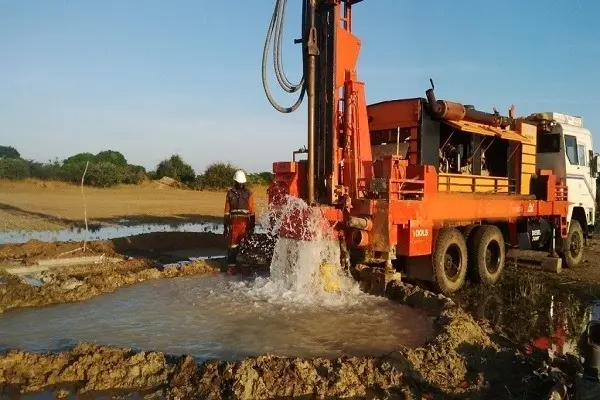
- We used a DTH (down‑the‑hole) hammer drilling technique, which is effective in hard rock.
- At 180 meters, we encountered a fractured zone with a significant increase in water inflow.
- We continued drilling to 220 meters to ensure we had fully penetrated the productive zone.
- Total drilling time: 7 days.
Phase 3: Development and Testing
- After reaching 220 meters, we developed the borehole to remove drilling debris and fine particles.
- A step‑drawdown pumping test was conducted to determine the optimal pumping rate and confirm the yield.
- Water samples were sent to a certified laboratory for analysis.
Completion & Pump Installation
With the pumping test confirming a sustainable yield, we proceeded with the completion:
- Casing – we installed 6‑inch steel casing from the surface to 40 meters to stabilise the upper section, followed by 4‑inch uPVC casing and screen from 40 to 220 meters.
- Gravel pack – carefully graded gravel was placed around the screen to filter out fine particles.
- Pump selection – based on the test data, we installed a 10 HP submersible pump with a stainless steel impeller, capable of delivering 8 m³/hr at the required head.
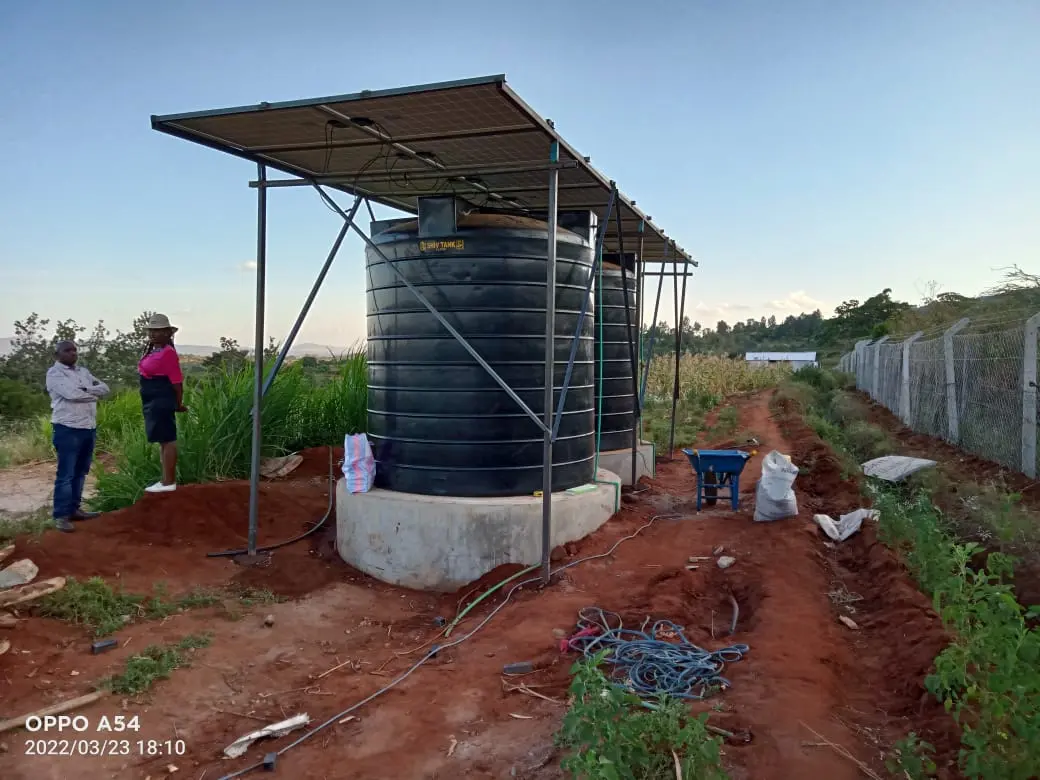
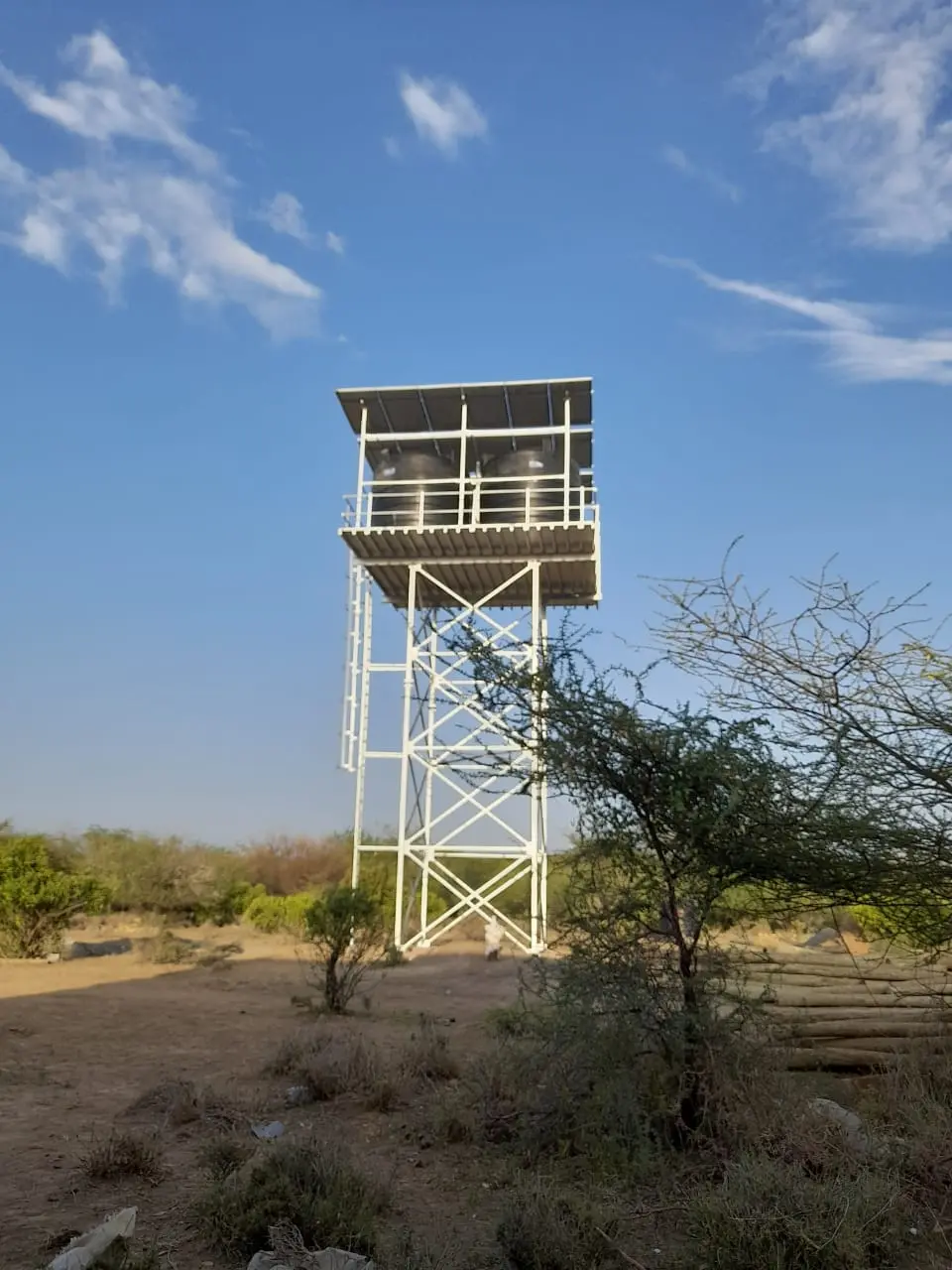
- Solar pumping system – given the remoteness of the site, we installed a solar‑powered pumping system with a 5 kW solar array and battery storage, ensuring reliable operation even during power outages.
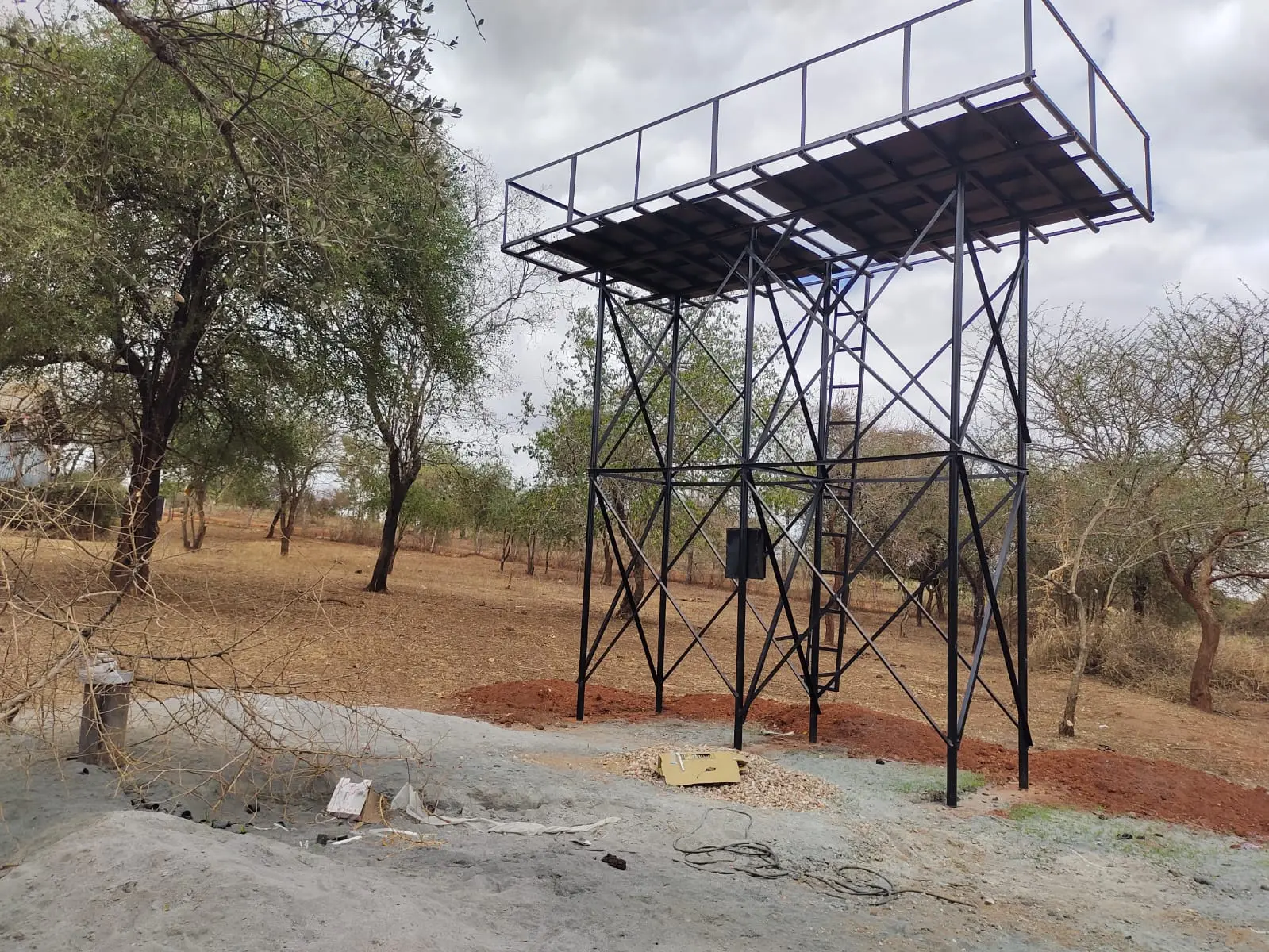
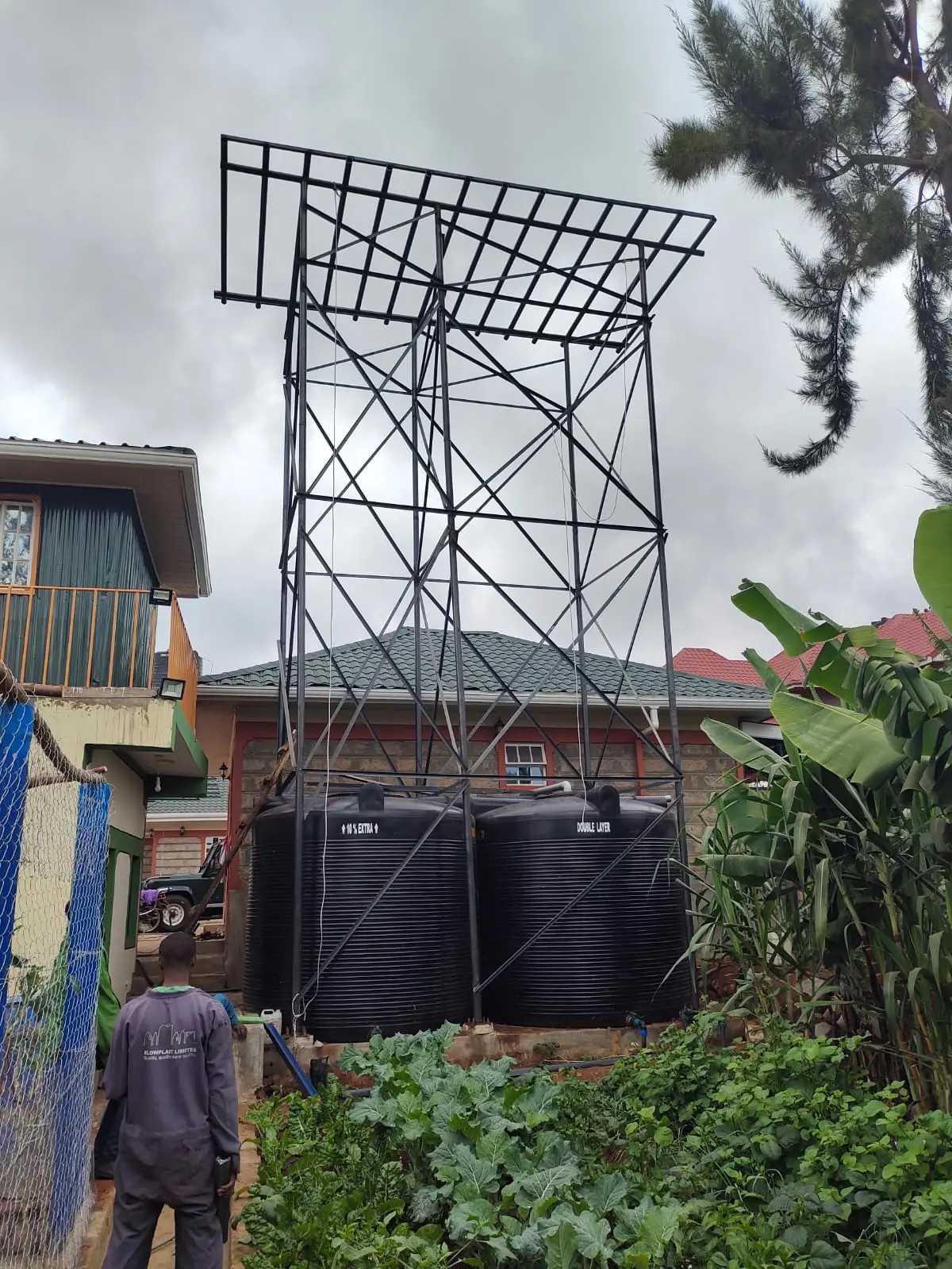
- Storage and distribution – a 20,000‑litre elevated tank was installed to provide gravity‑fed water to community tap stands.
The installation was completed within 5 days of the drilling finishing.
Results & Performance
The results were excellent and exceeded the community's expectations:
- Depth: 220 meters
- Static water level: 65 meters
- Pumping water level: 160 meters at 8 m³/hr
- Yield: 8 m³/hr (comfortably exceeding the 6 m³/hr requirement)
- Water quality: Good – pH 7.4, TDS 320 mg/L, no bacterial contamination, suitable for domestic use with minimal treatment.
- Drawdown: 95 meters at peak pumping rate, indicating a productive aquifer.
The solar pumping system operates reliably, providing approximately 8 hours of water supply per day, which is more than sufficient to meet the community's needs. The elevated tank ensures water is available even when the sun is not shining.
Community Impact
The borehole has transformed life in the community:
- Access to clean water – the community now has a reliable source of clean water, reducing the incidence of water‑borne diseases.
- Reduced walking distances – women and children no longer have to walk several kilometres to fetch water, freeing up time for education and income‑generating activities.
- Livestock support – the borehole provides water for livestock, improving animal health and productivity.
- Irrigation – the community has established a small vegetable garden, providing fresh produce and a source of income.
- Community cohesion – the project brought the community together, and the water committee manages the borehole effectively.
The project has been hailed as a model for community‑led water development in the region.
Lessons Learned
This project highlighted several key insights:
- Community engagement is critical – involving the community from the start built trust and ensured ownership of the project.
- Thorough survey is essential – the ERT survey accurately predicted the depth and location of the productive zone, avoiding costly dry holes.
- Solar power is a game changer – in remote areas with unreliable grid power, solar pumping provides a sustainable and cost‑effective solution.
- Capacity building matters – training community members on basic operation and maintenance ensures the borehole's long‑term sustainability.
- Partnerships deliver results – collaboration with the NGO and county government helped secure funding and ensured the project aligned with local development plans.
Client & Community Feedback
"WaterLink Limited gave us a gift that will last for generations. For the first time in our lives, we have clean water right in our village. Our children can go to school instead of spending hours fetching water. We are so grateful."
– Community Elder, Kajiado
"The collaboration with WaterLink Limited was seamless. Their professionalism, technical expertise, and commitment to community engagement made this project a success. We look forward to working with them on future projects."
– NGO Project Manager
Key Project Metrics
| Metric | Value |
|---|---|
| Location | Kajiado County, Kenya |
| Population served | 2,500 people |
| Borehole depth | 220 meters |
| Target yield | 6 m³/hr |
| Achieved yield | 8 m³/hr |
| Static water level | 65 meters |
| Pumping water level | 160 meters |
| Drawdown | 95 meters |
| Water quality (TDS) | 320 mg/L |
| Pump size | 10 HP submersible (solar powered) |
| Storage tank | 20,000 litres |
| Project duration | 12 working days |