What is DTH Drilling?
Down-The-Hole (DTH) drilling is a method where a pneumatic hammer is attached directly to the bottom of the drill string, just above the drill bit. The hammer strikes the rock face directly, breaking it into small fragments. Compressed air is pumped down the drill pipe, powering the hammer and carrying the cuttings back up to the surface through the annular space between the drill pipe and the borehole wall.
DTH drilling is particularly effective in hard rock formations such as volcanic basalts, granites, and phonolites—the types of rock commonly found in many parts of Kenya, including Nairobi, Kiambu, and the Rift Valley. The direct hammer action means that energy is transferred efficiently to the rock, resulting in faster penetration rates and straighter boreholes compared to other methods.
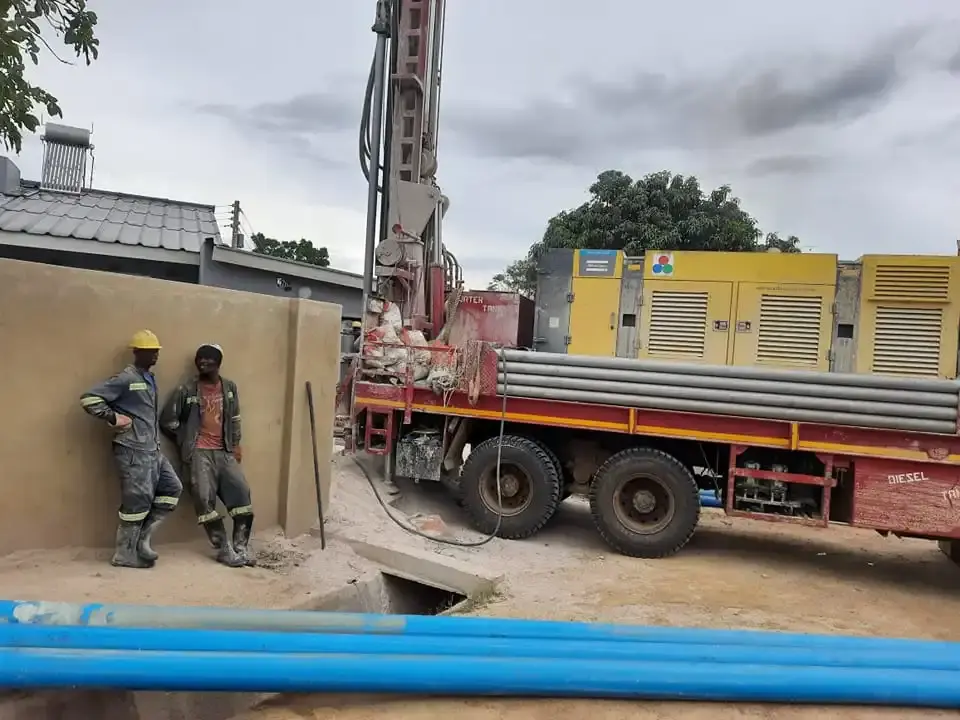
WaterLink Limited uses DTH drilling extensively in areas with hard volcanic geology. Our DTH rigs are capable of drilling to depths of 300 metres or more, making them suitable for both residential and commercial boreholes.
What is Mud Rotary Drilling?
Mud rotary drilling is a method that uses a rotating drill bit attached to the bottom of a drill string. The bit grinds or shears the rock as it rotates. A drilling fluid—commonly called "mud"—is pumped down through the drill pipe, where it cools the bit and carries the cuttings back to the surface.
The drilling mud serves several critical functions: it lubricates the drill bit, stabilises the borehole walls, and transports cuttings out of the hole. The mud is typically a mixture of water, bentonite clay, and various additives that adjust its viscosity and density to suit the specific formation.
Mud rotary is the method of choice for soft to medium formations, including sands, clays, weathered rocks, and sedimentary basins. It is commonly used in coastal areas and in regions where the geology is less consolidated. In Kenya, mud rotary is often used in areas like Mombasa, the coastal strip, and some parts of the Rift Valley with softer sediments.
DTH Drilling: Pros and Cons
Like any drilling method, DTH has its strengths and limitations. Understanding these helps you appreciate why it is chosen for certain projects.
Advantages of DTH Drilling
- Excellent for hard rock – the hammer action fractures rock efficiently, making it the fastest method in volcanic, granite, and other hard formations.
- Straighter boreholes – the hammer helps keep the drill bit aligned, resulting in less deviation from the vertical.
- No drilling fluid required – uses compressed air, eliminating the need for mud and reducing environmental impact.
- Faster penetration in hard rock – typically 2–5 times faster than mud rotary in hard formations, reducing overall drilling time.
- Lower water consumption – since air is used instead of water-based mud, water usage is minimal.
Disadvantages of DTH Drilling
- Less effective in soft formations – in sands, clays, or unconsolidated material, the hammer can get stuck or cause borehole instability.
- Higher equipment costs – DTH hammers and compressors are expensive to purchase and maintain.
- Requires experienced operators – the system is more complex and requires skilled technicians to operate effectively.
- Not ideal for unconsolidated formations – without the support of mud, the borehole walls may collapse in soft or sandy formations.
- Noise and dust – the hammering action is noisy, and the air exhaust can create dust, though modern systems have dust suppression.
Mud Rotary Drilling: Pros and Cons
Mud rotary is a versatile and widely used method, especially in regions with softer geology. Here's a balanced look at its strengths and weaknesses.
Advantages of Mud Rotary Drilling
- Versatile across formations – works well in sands, clays, weathered rock, and sedimentary formations.
- Supports borehole walls – the mud creates a filter cake on the borehole wall, preventing collapse in unstable formations.
- Excellent for deep drilling – can drill to great depths (500m+) with the right equipment and mud management.
- Good cuttings recovery – the mud carries cuttings to the surface, providing useful geological information.
- Lower noise levels – quieter than DTH, making it more suitable for residential or built-up areas.
Disadvantages of Mud Rotary Drilling
- Slow in hard rock – penetration rates drop significantly in volcanic or granite formations, increasing time and cost.
- Requires water and mud management – a constant supply of water and the proper handling of drilling mud is required, adding complexity.
- Environmental concerns – drilling mud can be harmful if not properly managed; disposal can be challenging.
- Higher water consumption – a mud rotary operation can use tens of thousands of litres of water.
- Risk of formation damage – if the mud is not properly formulated, it can clog the pores of the aquifer, reducing yield.
Side-by-Side Comparison
The table below summarises the key differences between DTH and mud rotary drilling, making it easy to see which method is better suited to different conditions.
| Feature | DTH Drilling | Mud Rotary Drilling |
|---|---|---|
| Best for geology | Hard rock (volcanic, granite, basalt) | Soft to medium formations (sand, clay, weathered rock, sediment) |
| Penetration rate in hard rock | Fast (2–5× faster than mud rotary) | Slow |
| Borehole stability | Moderate (requires competent rock) | Good (mud supports the walls) |
| Cuttings removal | Air (compressed) | Mud (liquid) |
| Water consumption | Low | High |
| Environmental impact | Lower (no mud disposal) | Higher (mud management required) |
| Noise level | High | Moderate |
| Equipment cost | High (compressor, hammer) | Moderate (mud pumps, tank) |
| Operator skill required | High | Moderate |
| Max depth (typical) | 300–400 metres | 500+ metres |
| Common in Kenya | Nairobi, Kiambu, Rift Valley | Coastal region, sedimentary basins |
Which Method for Which Geology?
Choosing the right method is primarily determined by the geology of your site. Here's a quick guide based on Kenya's geological regions:
When to Choose DTH Drilling
- Volcanic areas – Nairobi, Kiambu, Nakuru, Naivasha, and parts of the Rift Valley are underlain by volcanic rocks that are ideal for DTH drilling.
- Granite and hard basement rock – areas like Machakos, Kitui, and parts of Meru.
- Areas with fractured rock – DTH can effectively open fractures, enhancing water yield.
- Deep boreholes in hard formations – when drilling beyond 100–150 metres in hard rock, DTH is typically faster and more cost-effective.
When to Choose Mud Rotary Drilling
- Sedimentary basins – coastal areas like Mombasa, Kilifi, and parts of Lamu have sedimentary formations suitable for mud rotary.
- Alluvial and riverine deposits – areas with deep sands and gravels, such as the Tana River basin.
- Weathered and soft rock – areas with deep weathering profiles, such as parts of Western Kenya.
- Shallow boreholes – for depths under 100 metres, mud rotary can be more economical, especially in soft formations.
In some projects, a hybrid approach is used: mud rotary is used for the upper, unconsolidated layers, and DTH is deployed when hard rock is encountered. This optimises efficiency and cost.
Cost Considerations
The cost of drilling is a major factor for most property owners. While it's tempting to focus on the per-metre drilling cost, the total cost depends on several factors:
- Geology – the primary driver. DTH in hard rock may be more expensive per metre upfront but can be faster, reducing overall cost. Mud rotary in soft formations is typically cheaper per metre.
- Drilling depth – deeper boreholes require more time and equipment, increasing costs regardless of the method.
- Mobilisation and setup – both methods have mobilisation costs, but DTH rigs and compressors can be more expensive to transport.
- Water and mud management – mud rotary requires water supply and mud disposal, which can add significant costs in areas with limited water.
- Time – faster drilling (DTH in hard rock) means less time on site, reducing site overheads and labour costs.
Cost-Saving Tip: A thorough hydrogeological survey, including resistivity testing, helps predict the geology and select the most cost-effective drilling method from the outset, avoiding costly mid-project changes.
How WaterLink Limited Chooses the Right Method
At WaterLink Limited, we don't take a one-size-fits-all approach. Our selection of DTH or mud rotary is based on a thorough assessment that includes:
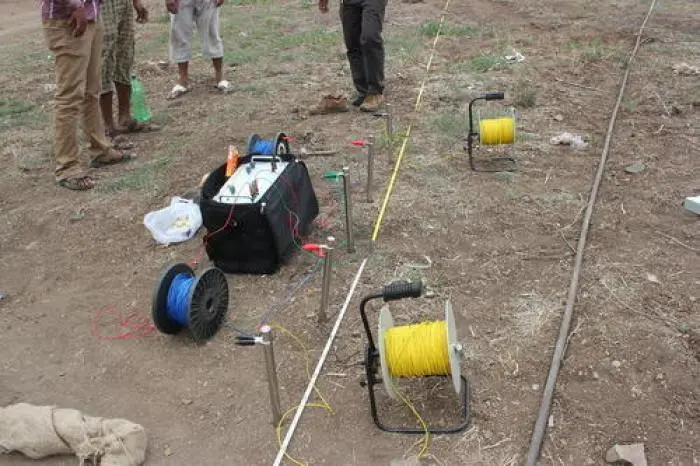
- Hydrogeological survey – we conduct detailed resistivity and seismic surveys to understand the subsurface geology and identify the most promising aquifer zones.
- Geological mapping – using geological maps and our local knowledge, we predict the likely formations and select the appropriate drilling method.
- Project requirements – we consider the target depth, yield requirements, and budget to recommend the most cost-effective method.
- Site conditions – accessibility, water availability, and environmental sensitivity all influence the decision.
- Flexibility – we own and operate both DTH and mud rotary rigs, allowing us to switch methods if the geology changes unexpectedly.
- Experience – with over 30 years of drilling in Kenya, our team has the expertise to make the right choice and adapt as conditions dictate.
By carefully matching the drilling method to the specific conditions, we ensure efficient, cost-effective, and successful borehole projects for our clients.