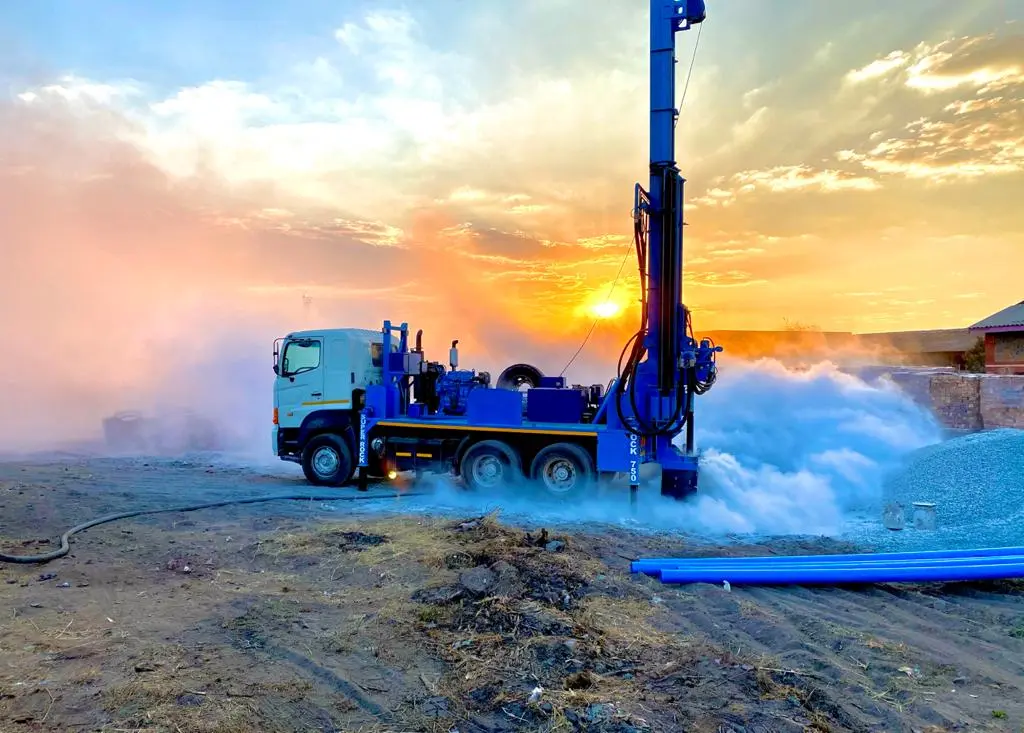
The Unique Challenge of Ngong's Volcanic Terrain
Hiring the wrong borehole drilling contractor for your Ngong or Ongata Rongai property could cost you millions of shillings, delay your project, or even lead to legal penalties. Before signing any contract, it's essential to verify that the company holds a valid Water Resources Authority (WRA) license and has the specialized equipment for volcanic rock. This guide helps you choose a licensed borehole drilling company with DTH expertise for this challenging terrain.
The Ngong hills and Ongata Rongai area present one of the most challenging drilling environments in Kenya. The region's volcanic rock formations require specialized equipment, expertise, and techniques to successfully strike water.
At WaterLink Limited, a WRA licensed borehole drilling company with Class A status, we've completed over 100 successful borehole projects in Ngong and Ongata Rongai, achieving a 98% success rate. Our experience with the area's unique geology—characterized by hard volcanic basalts, complex fracture networks, and variable water tables—positions us as the leading drilling contractor for this challenging terrain.
Ngong at a Glance: The Ngong hills are ancient volcanic formations with deeply fractured rock. While challenging to drill, these fractures create excellent aquifers with high-quality water.
Understanding Ngong and Ongata Rongai's Geology
The Ngong area sits on volcanic rocks from the Pleistocene era, characterized by specific formations that affect drilling success:
Geological Formations
- Ngong Hills: Hard volcanic basalts and trachytes with extensive fracturing. The proximity to the hills means deeper, more fractured rock with excellent water potential but challenging drilling conditions.
- Ongata Rongai: Similar volcanic formations with moderate fracturing. The area is slightly less challenging than the hills but still requires specialized equipment.
Aquifer Characteristics
- Ngong: Fractured volcanic rock aquifers at 180-280 meters. The fractures create excellent water flow paths, yielding 10-25m³/hr of high-quality water.
- Ongata Rongai: Fractured aquifers at 160-240 meters. Yields of 8-20m³/hr are common, with good water quality.
Geological Insight: The volcanic rock in Ngong is highly fractured, which is excellent for water storage but requires precise drilling to intersect productive fracture zones.
Borehole Depths and Yields
The unique geology of the Ngong area determines typical borehole depths and yields:
| Location | Typical Depth (m) | Typical Yield (m³/hr) | Water Quality |
|---|---|---|---|
| Ngong Hills (Upper) | 220 – 280 | 10 – 25 | Excellent, minimal treatment |
| Ngong (Lower) | 180 – 250 | 8 – 20 | Very good, light treatment needed |
| Ongata Rongai | 160 – 240 | 6 – 18 | Good, some areas have fluoride |
Note: These are typical ranges. Individual results vary based on exact location and geological conditions.
Cost of Borehole Drilling in Ngong & Ongata Rongai
The challenging volcanic rock terrain means drilling costs in Ngong are typically higher than in other regions. Here's a comprehensive breakdown:
Average Costs by Location
| Location | Average Cost (KES) | Typical Depth |
|---|---|---|
| Ngong Hills (Upper) | 1,400,000 – 2,500,000 | 220-280m |
| Ngong (Lower) | 1,200,000 – 2,200,000 | 180-250m |
| Ongata Rongai | 1,000,000 – 1,900,000 | 160-240m |
Cost Components
- Hydrogeological Survey: KES 50,000 – 80,000 (essential for fracture mapping)
- WRA and NEMA Permits: KES 30,000 – 70,000
- Drilling and Casing: KES 800,000 – 1,800,000 (higher due to hard rock)
- Test Pumping: KES 80,000 – 150,000
- Pump and Installation: KES 150,000 – 500,000
Cost-Saving Tip: While Ngong's drilling costs are higher, the water quality is exceptional, often requiring minimal treatment. This saves money on treatment systems in the long run.
Why DTH Drilling is Essential for Volcanic Rock
Drilling through Ngong's volcanic rock requires specialized technology that standard mud-rotary rigs cannot handle effectively.
What is DTH (Down-The-Hole) Drilling?
DTH drilling uses a high-powered hammer that strikes directly at the bottom of the borehole, powered by compressed air. This method is specifically designed for hard rock formations.
Advantages of DTH in Volcanic Rock
- Faster Drilling: Cuts through hard volcanic rock 2-3 times faster than conventional methods.
- Cleaner Boreholes: Air-powered means no drilling mud contamination.
- Better Fracture Intersection: The percussive action opens up existing fractures, improving water flow.
- Reduced Deviation: Maintains straighter boreholes in hard formations.
WaterLink's DTH Capabilities
WaterLink Limited operates advanced DTH rigs capable of drilling through Ngong's volcanic rock efficiently. Our equipment is specifically maintained for hard rock drilling, ensuring minimal downtime and maximum success rates.
Technical Insight: In Ngong's volcanic rock, DTH drilling can achieve penetration rates of 8-15 meters per hour, compared to 2-5 meters per hour with standard methods.
Permits and Compliance
Borehole drilling in Ngong and Ongata Rongai requires the same permits as elsewhere in Kenya, with specific considerations for the area:
- WRA Water Permit for Construction: Mandatory before drilling. Ngong's deep aquifers require accurate depth estimates.
- NEMA Environmental Impact Assessment: Required for all boreholes. The environmental assessment must address Ngong's unique ecosystem considerations.
- County Government Approval: Kajiado County (for Ongata Rongai) and Nairobi County (for parts of Ngong) have specific requirements.
- Water Use Permit: Required after drilling for ongoing abstraction.
WaterLink Limited handles all permit applications for our clients in Ngong and Ongata Rongai, ensuring a smooth and compliant process.
Useful Authority Links
Success Stories from WaterLink Limited
Ngong Luxury Estate Borehole
- Location: Ngong Hills
- Depth: 240 meters
- Yield: 18m³/hr
- Solution: DTH drilling with VFD pump system for luxury villas
- Result: Exceptional water quality, satisfied homeowners
Ongata Rongai Residential Borehole
- Location: Ongata Rongai
- Depth: 180 meters
- Yield: 12m³/hr
- Solution: DTH drilling with solar pumping system
- Result: Reliable water, zero electricity costs
Ngong Community Borehole
- Location: Ngong (Lower)
- Depth: 200 meters
- Yield: 15m³/hr
- Solution: High-capacity shared borehole with 100,000L storage
- Result: Reliable water for 200+ households
Client Feedback: "WaterLink Limited's DTH expertise was essential for our Ngong property. They navigated the volcanic rock perfectly and delivered excellent water quality." — John K., Ngong Homeowner
Choosing the Right Contractor for Volcanic Terrain
Not all drilling contractors can handle Ngong's volcanic rock. Here's what to look for:
- DTH Equipment: Ensure the contractor has DTH rigs specifically maintained for hard rock.
- Experience: Choose a contractor with a proven track record in Ngong's volcanic terrain.
- Licensing: Verify WRA, NEMA, and NCA licenses.
- References: Ask for past client references in Ngong or similar volcanic areas.
- Transparency: Get an itemized quote with all costs clearly listed.
- Guarantee: Look for a contractor who stands behind their work in challenging geology.
WaterLink Advantage: With specialized DTH rigs and over 100 successful Ngong projects, we have the local knowledge and equipment to deliver reliable water solutions in this challenging terrain.