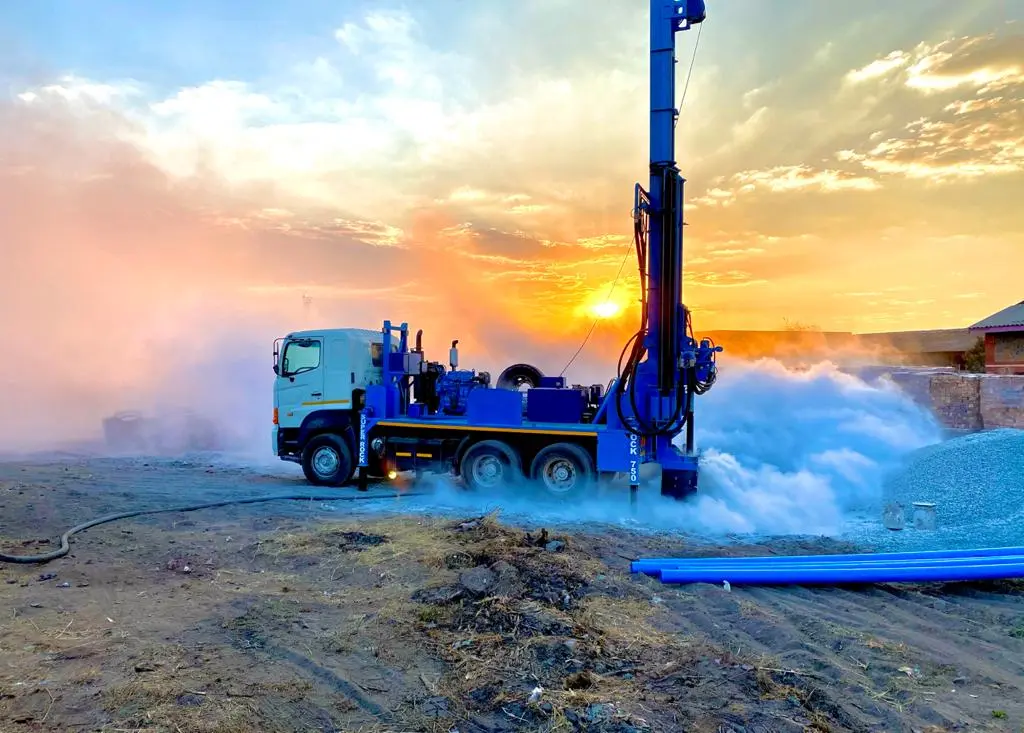
Why Gated Communities Need Boreholes
Hiring the wrong borehole drilling contractor for your gated community could cost you millions of shillings, delay your project, or even lead to legal penalties. Before signing any contract, it's essential to verify that the company holds a valid Water Resources Authority (WRA) license. This guide explains exactly how to choose a licensed borehole drilling company for your estate and avoid common pitfalls.
Gated communities and real estate estates across Kenya are increasingly turning to borehole drilling as a strategic solution for water security. With Nairobi's municipal water supply struggling to keep pace with rapid urban development, property developers who invest in boreholes are gaining a significant competitive advantage.
At WaterLink Limited, a WRA licensed borehole drilling company with Class A status, we've designed and installed estate borehole systems for dozens of gated communities—from 10-unit luxury villas in Karen to 500+ unit housing estates in Ruiru and Kitengela. This guide covers everything developers need to know about multi-unit borehole projects.
Key Insight: According to our internal data, estates with reliable borehole water supply sell 15–25% faster and at 8–12% higher prices than those relying solely on municipal water. For a 50-unit development, that translates to millions of shillings in additional revenue.
Understanding Water Demand for Estates
Accurately calculating water demand is the first critical step in designing an estate borehole system. Here's a breakdown:
Typical Water Consumption per Household
- Basic home (2–3 people): 800 – 1,200 liters per day
- Average home (4–5 people): 1,200 – 2,000 liters per day
- Luxury villa (with garden/pool): 2,500 – 5,000+ liters per day
Estate Water Demand Examples
- 10 villa estate: 20,000 – 50,000 liters/day (depends on villa size)
- 50 unit housing estate: 60,000 – 100,000 liters/day
- 100+ unit housing estate: 120,000 – 250,000+ liters/day
Peak Demand vs Average Demand
Estate water systems must handle peak demand periods—typically mornings and evenings when residents are at home. We design systems with adequate storage to manage peak flows.
Pro Tip: Always size your shared borehole system for peak demand plus 20% buffer. WaterLink Limited provides professional demand calculations as part of our estate consultation.
Shared vs Individual Borehole Systems
Estates have two main options for borehole water supply:
Option 1: Shared Central Borehole System
A single high-capacity borehole serves the entire estate, with water distributed through a network of pipes to individual homes.
- Advantages: Lower cost per unit, centralized maintenance, better water security.
- Disadvantages: Requires shared agreements, potential for disputes, needs clear management structure.
- Best for: Medium to large estates (20+ units).
Option 2: Individual Boreholes
Each home has its own borehole. This is common in high-end luxury estates.
- Advantages: No shared costs or disputes, complete independence.
- Disadvantages: Higher total cost, more equipment, more permits.
- Best for: Luxury estates where buyers expect individual water systems.
Shared vs Individual Borehole Systems — Comparison
| Criteria | Shared Central Borehole | Individual Boreholes |
|---|---|---|
| Cost per unit | Low (KES 60k–140k) | High (KES 400k–800k+) |
| Maintenance | Centralized, easier | Individual responsibility |
| Water security | High (shared reserve) | Varies per borehole |
| Permit complexity | Single application | Multiple applications |
| Dispute risk | Moderate | Low |
| Best for | 20+ unit estates | Luxury / high-end |
WaterLink Recommendation: For most estates, a shared central borehole system is the most cost-effective and reliable solution. We design systems that can be easily managed by homeowners' associations.
Key Design Considerations for Estate Boreholes
Estate borehole systems are more complex than single-home installations. Here are the critical design elements:
1. Borehole Sizing
The borehole must be sized to meet peak demand. We conduct hydrogeological surveys to determine the optimal depth and yield.
2. Pump Selection
Estate systems require high-capacity pumps capable of delivering consistent pressure across long distances. We recommend variable frequency drive (VFD) pumps for optimal pressure management.
3. Storage Tanks
Elevated storage tanks provide gravity-fed pressure and emergency reserves. For estates, we typically recommend 1–2 days of storage capacity.
4. Distribution Network
The pipe network must be sized to deliver adequate pressure to the furthest homes. We design looped systems for redundancy.
5. Backup and Redundancy
Estates need backup power (generator or solar) and redundancy in case of pump failure. We design systems with dual pumps or quick-change capabilities.
6. Water Treatment
If water quality requires treatment, we design systems capable of handling the estate's total demand. This may include filtration, UV sterilization, or reverse osmosis.
7. Metering and Monitoring
Sub-metering allows fair cost distribution among residents. Smart monitoring systems help detect leaks and manage consumption.
Cost Breakdown for Estate Borehole Projects
Estate borehole costs vary based on size and complexity. Here's a typical breakdown for a 50-unit estate:
| Component | Estimated Cost (KES) |
|---|---|
| Hydrogeological Survey | 80,000 – 150,000 |
| WRA and NEMA Permits | 50,000 – 100,000 |
| Drilling and Casing (150–250m) | 1,200,000 – 2,500,000 |
| High-Capacity Pump and VFD | 400,000 – 800,000 |
| Elevated Steel Tank (50,000–100,000L) | 500,000 – 1,200,000 |
| Distribution Piping Network | 300,000 – 800,000 |
| Sub-Metering System | 200,000 – 500,000 |
| Water Treatment (if needed) | 200,000 – 500,000 |
| Installation and Commissioning | 200,000 – 400,000 |
| Total Approximate Cost | 3,130,000 – 6,950,000 |
Note: Costs vary based on site-specific conditions, depth, geology, and system requirements.
Cost Per Unit: For a 50-unit estate, the cost per unit is approximately KES 62,600 – 139,000 per home—far less than the cost of municipal water connections and ongoing bills.
Permits and Legal Compliance
Estate boreholes require the same permits as individual boreholes, but the application process is more complex:
- WRA Water Permit for Construction: Required before drilling begins.
- NEMA Environmental Impact Assessment: Required for commercial/estate projects.
- Water Use Permit: Required for ongoing abstraction.
- County Government Approval: May be required depending on the location.
Good News: WaterLink Limited handles all permit applications for estate projects, including the more complex documentation required for multi-unit developments.
Permit Tip: Estate borehole permits often take longer to process. We recommend starting the permit process early—ideally during the planning phase.
Useful Authority Links
Water Rights and Sharing Agreements
For shared estate boreholes, clear agreements are essential:
Key Elements of a Shared Water Agreement
- Cost Sharing: How initial construction costs are divided.
- Operating Costs: How electricity, maintenance, and repairs are shared.
- Abstraction Limits: Each home's allocation.
- Management Structure: Who manages the system (often the homeowners' association).
- Emergency Procedures: What happens during breakdowns or shortages.
WaterLink Limited can provide templates for water sharing agreements and advice on fair cost allocation models.
Case Study: Successful Estate Borehole in Runda
WaterLink Limited completed a borehole system for a 35-villa gated community in Runda, Nairobi:
Project Overview
- Location: Runda, Nairobi
- Number of Units: 35 luxury villas
- Daily Demand: 70,000 liters (peak)
- Borehole Depth: 220 meters
- Yield: 15m³/hr
Our Solution
- Drilled 220m borehole with steel casing (for durability)
- Installed 15HP submersible pump with VFD for constant pressure
- Erected 50,000L elevated steel tank
- Designed looped distribution network
- Installed UV water treatment system
- Implemented smart sub-metering
Results
- Eliminated monthly water bills for all residents
- Increased property values by 18%
- Reduced water-related complaints to zero
- System paid for itself within 4 years
Client Feedback: "WaterLink Limited delivered an exceptional system. Our residents have reliable, high-quality water 24/7. The investment has been transformative for our community." — Estate Manager, Runda Gated Community