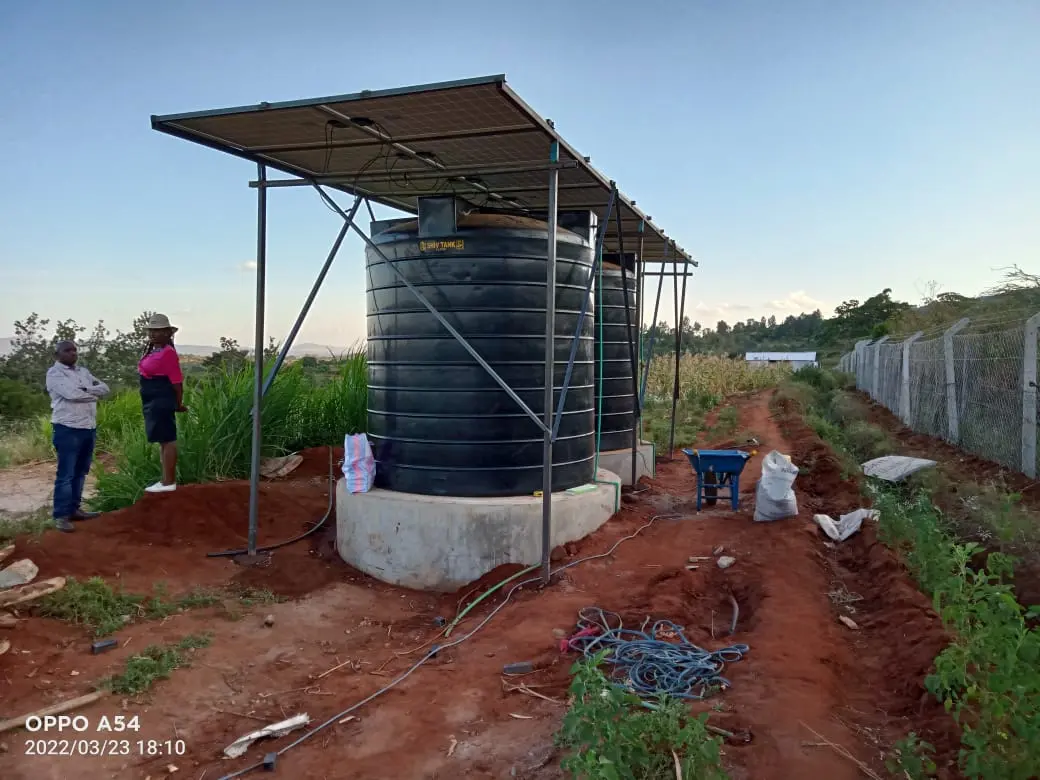
Why Kangundo Road is an Agricultural Hub
Kangundo Road has emerged as one of Kenya's most important agricultural corridors. Stretching from Nairobi's eastern outskirts through Machakos County, this region supports thousands of farming operations—from smallholder vegetable farms to large-scale commercial horticultural enterprises.
At WaterLink Limited, we've completed over 120 agricultural borehole projects along the Kangundo Road corridor, helping farmers achieve water independence and dramatically increase their crop yields. This guide consolidates our local knowledge to help farmers make informed decisions about agricultural borehole drilling and irrigation systems.
According to the Kenya Agricultural and Livestock Research Organization (KALRO), farms with reliable irrigation achieve 2-3 harvests per year compared to 1 harvest for rain-fed farming, increasing annual revenue by 200-300%. See the full ROI comparison for agricultural boreholes.
Agricultural Insight: Farms along Kangundo Road with reliable borehole irrigation typically achieve 2-3 harvests per year, increasing annual revenue by 200-300%.
Understanding the Kangundo Road Farming Corridor
Kangundo Road runs through a diverse agricultural landscape with varying farming systems:
Farming Types Along Kangundo Road
- Smallholder Farms (1-5 acres): Vegetables, maize, beans, and subsistence crops.
- Medium Commercial Farms (5-50 acres): Horticulture, fruit orchards, and dairy farming.
- Large Commercial Farms (50+ acres): Intensive horticulture, flower farming, and large-scale grain production.
Key Agricultural Areas
- Near Nairobi: Intensive vegetable farming supplying Nairobi's fresh produce markets.
- Mid-Corridor: Mixed farming with a focus on maize and beans.
- Machakos Section: Larger farms with irrigation infrastructure. Learn more about Machakos farming.
Year-Round Production
Irrigation enables farming throughout the year, not just during rainy seasons.
Higher Yields
Irrigated farms produce 2-4 times more per acre than rain-fed farms.
Drought Resilience
Protects crops during dry seasons when rain-fed farms fail.
Geology and Aquifer Characteristics
Kangundo Road traverses varied geology that affects borehole success:
Geological Formations
- Near Nairobi: Weathered volcanic rock with clay interbeds. Moderate drilling depths of 80-150 meters.
- Mid-Corridor: Volcanic basalts and sedimentary deposits. Depths of 100-180 meters.
- Machakos Section: Granitic and volcanic formations. Depths of 120-200 meters.
Aquifer Characteristics
- Yields: 5-20m³/hr depending on exact location.
- Water Quality: Generally good for irrigation. Some areas have high iron or hardness.
- Depth Range: 80-200 meters typical for agricultural boreholes.
Hydrogeological Insight: The Kangundo Road corridor has reliable aquifers at moderate depths, making it ideal for agricultural borehole investment. Learn about hydrogeological surveys.
Agricultural Borehole Costs
The cost of drilling an agricultural borehole along Kangundo Road depends on depth, geology, and system requirements:
Average Costs by Farm Size
| Farm Size | Borehole Cost (KES) | Irrigation System (KES) | Total Investment (KES) |
|---|---|---|---|
| Small (1-5 acres) | 600,000 - 1,000,000 | 200,000 - 400,000 | 800,000 - 1,400,000 |
| Medium (5-20 acres) | 800,000 - 1,500,000 | 400,000 - 800,000 | 1,200,000 - 2,300,000 |
| Large (20-100 acres) | 1,200,000 - 2,500,000 | 800,000 - 2,000,000 | 2,000,000 - 4,500,000 |
Cost Components
- Hydrogeological Survey: KES 50,000 - 80,000
- WRA and NEMA Permits: KES 30,000 - 80,000
- Drilling and Casing: KES 500,000 - 1,800,000
- Test Pumping: KES 80,000 - 150,000
- Pump and Installation: KES 150,000 - 500,000. See solar pump prices.
- Irrigation System: KES 200,000 - 2,000,000
Cost-Saving Tip: Solar pumping systems have higher upfront costs but zero monthly electricity bills, making them ideal for long-term farm operations. See detailed agricultural cost breakdown.
Irrigation System Solutions
Choosing the right irrigation system is critical for maximizing the value of your agricultural borehole:
1. Drip Irrigation
- Best For: Vegetables, fruits, and row crops.
- Water Efficiency: 90-95% efficiency (highest of all methods).
- Cost: KES 200,000 - 1,500,000 per acre installed.
- Advantages: Minimal water waste, precise nutrient delivery, reduced disease pressure.
2. Sprinkler Irrigation
- Best For: Grains, pasture, and larger fields.
- Water Efficiency: 70-80% efficiency.
- Cost: KES 150,000 - 800,000 per acre installed.
- Advantages: Lower cost than drip, covers large areas quickly.
3. Furrow / Flood Irrigation
- Best For: Traditional row crops with low-value production.
- Water Efficiency: 50-60% efficiency.
- Cost: Lowest upfront cost (KES 50,000 - 200,000 per acre).
- Advantages: Simple, low-tech, minimal equipment needed.
WaterLink Recommendation: For most commercial farms along Kangundo Road, we recommend drip irrigation for its superior water efficiency and yield benefits. The higher upfront cost is quickly recovered through increased production.
Irrigation Method Comparison
Here's a quick comparison to help you choose the right irrigation system:
| Feature | Drip Irrigation | Sprinkler Irrigation | Furrow Irrigation |
|---|---|---|---|
| Water Efficiency | 90-95% | 70-80% | 50-60% |
| Cost per Acre | Higher (KES 200k - 1.5M) | Medium (KES 150k - 800k) | Lower (KES 50k - 200k) |
| Labor Required | Low | Medium | High |
| Yield Increase | 3-4x | 2-3x | 1.5-2x |
| Best For | Vegetables, fruits | Grains, pasture | Low-value row crops |
Choose the system that best matches your crop type, budget, and water availability.
Solar vs Electric Pumping for Farms
Agricultural operations have unique pumping needs. Here's how solar and electric options compare:
Solar Pumping
- Advantages: Zero electricity costs, ideal for daytime irrigation, 25+ year panel lifespan.
- Disadvantages: Higher upfront cost, weather dependent.
- Best For: Farms with daytime irrigation schedules.
- ROI: Payback in 3-5 years through electricity savings. See solar pump prices.
Electric Pumping (Grid)
- Advantages: Lower upfront cost, consistent performance regardless of weather.
- Disadvantages: Ongoing electricity bills (KES 10,000-50,000 monthly for farms).
- Best For: Farms with reliable grid power and lower irrigation demands.
- ROI: Payback in 2-4 years through avoided water costs.
Farmer Insight: Many Kangundo Road farmers are switching to solar pumping to eliminate electricity costs. A 5-10kW solar system can power irrigation for 10-50 acres with no monthly bills. Full solar vs electric comparison.
Permits for Agricultural Boreholes
Agricultural boreholes require specific permits and compliance:
- WRA Water Permit for Construction: Required before drilling. Agricultural boreholes often require additional documentation on intended water usage.
- NEMA Environmental Impact Assessment: Required for all agricultural boreholes. Learn about NEMA requirements.
- Water Use Permit: Required after drilling, with specific abstraction limits for agricultural use.
- County Government Approval: Machakos County has specific requirements for agricultural water abstraction. See Machakos county guide.
WaterLink Limited handles all permit applications for our agricultural clients, ensuring a smooth and compliant process. Complete permits guide.
Success Stories from WaterLink Limited
Kangundo Road Vegetable Farm
- Location: Kangundo Road, near Nairobi
- Farm Size: 10 acres
- Borehole Depth: 120 meters
- Yield: 12m³/hr
- Solution: Solar-powered borehole with drip irrigation system
- Result: 3 harvests per year, 250% increase in annual revenue
Machakos Horticultural Farm
- Location: Machakos section, Kangundo Road
- Farm Size: 50 acres
- Borehole Depth: 160 meters
- Yield: 18m³/hr
- Solution: High-capacity electric pump with sprinkler system
- Result: Year-round production, supply contracts with major supermarkets
Smallholder Farm Irrigation
- Location: Mid-corridor, Kangundo Road
- Farm Size: 3 acres
- Borehole Depth: 80 meters
- Yield: 6m³/hr
- Solution: Solar-powered borehole with drip irrigation
- Result: From subsistence to commercial farming, doubled family income
Farmer Feedback: "WaterLink Limited transformed our farm along Kangundo Road. The borehole and irrigation system have tripled our production and eliminated water worries." — Peter N., Kangundo Road Farmer