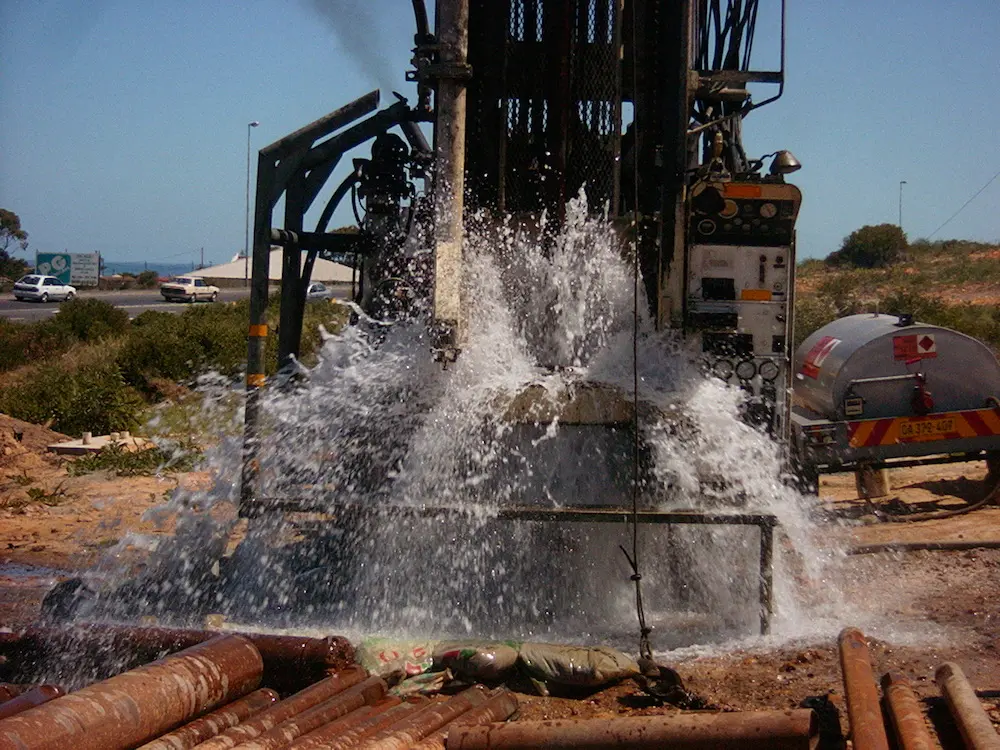
What is a NEMA Environmental Impact Assessment (EIA)?
A NEMA Environmental Impact Assessment (EIA) is a formal, systematic process that evaluates the potential environmental, social, and economic impacts of a proposed project—in this case, a borehole—before it is implemented. The EIA is required under the Environmental Management and Coordination Act (EMCA) 1999, which is administered by the National Environment Management Authority (NEMA) in Kenya.
The purpose of an EIA is to ensure that the environmental consequences of a project are identified, assessed, and mitigated early in the planning process. It provides a framework for decision-making that balances development needs with environmental sustainability. For a borehole, the EIA examines factors such as groundwater availability, potential impacts on the water table, risks of contamination, effects on neighbouring boreholes, and the overall sustainability of the water source.
An EIA is not just a bureaucratic requirement—it is a tool that helps property owners, developers, and communities avoid costly mistakes, protect water resources, and ensure long-term water security. A well-conducted EIA can also streamline the permitting process with the WRA and county governments.
Why is a NEMA EIA Required for Boreholes?
The requirement for an EIA is rooted in Kenya's commitment to sustainable development and environmental protection. Boreholes, while essential for water supply, can have significant environmental impacts if not properly planned and managed. These include:
- Groundwater depletion – over‑abstraction can lower the water table, affecting neighbouring boreholes, springs, and ecosystems.
- Water quality degradation – improper construction or poor grouting can allow surface contaminants to enter the aquifer.
- Land subsidence – excessive groundwater extraction can cause the ground to sink, damaging infrastructure.
- Interference with other users – a poorly sited borehole can reduce yields for neighbouring wells.
- Ecological impacts – changes in groundwater levels can affect wetlands, rivers, and terrestrial ecosystems.
- Waste management – drilling mud and cuttings must be disposed of properly to avoid soil and water pollution.
By conducting an EIA, these risks are identified and addressed before drilling begins. The EIA ensures that the borehole is sited, designed, and operated in a way that minimises environmental harm and ensures the long‑term sustainability of the water resource.
Key Fact: Under EMCA 1999, any project that may have significant environmental impacts must undergo an EIA. NEMA has classified borehole drilling as a project that requires EIA approval, regardless of the scale.
The Legal Framework
The legal requirement for an EIA is established under several key instruments:
| Legislation/Regulation | Requirement |
|---|---|
| Environmental Management and Coordination Act (EMCA) 1999 | Establishes the EIA requirement for projects that may have significant environmental impacts. Section 58 requires that an EIA be conducted and approved by NEMA before a project commences. |
| Environmental (Impact Assessment and Audit) Regulations, 2003 | Provides detailed procedures for conducting EIAs, including the content of the EIA report, public participation, and the review process. |
| Water Act 2016 | Requires that water abstraction projects be environmentally sustainable, and an EIA is often a prerequisite for a WRA water permit. |
| County Government Acts | Counties may have additional environmental requirements, but the NEMA EIA is the primary national-level requirement. |
Failure to comply with these regulations is a criminal offence, and NEMA has the authority to enforce compliance through fines, prosecution, and project closure.
When is an EIA Required for a Borehole?
Under EMCA, all boreholes require an EIA. However, the scope and complexity of the EIA can vary depending on the type and scale of the borehole. The table below provides a general guide:
| Borehole Type | EIA Requirement | Typical Scope |
|---|---|---|
| Domestic borehole (residential) | Simplified EIA | Basic assessment of groundwater availability, water quality, and minimal mitigation measures. |
| Community borehole | Full EIA | Includes social impact assessment, public consultation, and detailed groundwater modelling. |
| Agricultural/irrigation borehole | Full EIA | Assesses impacts on water table, neighbouring users, and long‑term sustainability. |
| Industrial/commercial borehole | Full EIA | Comprehensive assessment including waste management, contamination risk, and mitigation. |
| Deep borehole (>200m) | Full EIA | Includes hydrogeological modelling, aquifer testing, and detailed environmental management plan. |
The specific requirements are determined by NEMA based on the project's location, scale, and potential environmental impact. It is always advisable to engage a qualified environmental consultant early in the process to determine the scope of the EIA needed.
The EIA Process: Step-by-Step
The EIA process for a borehole typically follows these steps:
- Step 1: Project screening and scoping – the project is reviewed to determine the appropriate level of EIA. A scope of work is developed outlining the areas to be assessed.
- Step 2: Site assessment and data collection – the consultant visits the site to collect baseline data on geology, hydrology, ecology, and existing land use. Water quality and groundwater levels may be measured.
- Step 3: Impact identification – potential environmental impacts are identified, including effects on groundwater quantity and quality, soil, vegetation, and neighbouring water users.
- Step 4: Mitigation planning – measures are developed to avoid, reduce, or compensate for the identified impacts. This may include recommendations on borehole design, depth, pumping rates, and waste management.
- Step 5: Public consultation – for larger projects, affected stakeholders (neighbours, community members) are consulted to gather their views and concerns.
- Step 6: EIA report preparation – the consultant prepares a comprehensive EIA report that includes the findings, impact assessment, mitigation measures, and an environmental management plan.
- Step 7: Submission to NEMA – the EIA report is submitted to NEMA along with the application fee. NEMA reviews the report and may request additional information.
- Step 8: NEMA review and decision – NEMA reviews the report, may conduct its own site visit, and issues an EIA approval or requests revisions. If approved, the EIA approval is a prerequisite for the WRA water permit.
- Step 9: Implementation and monitoring – the borehole is constructed according to the approved EIA, and the environmental management plan is implemented. NEMA may conduct follow-up audits.
The entire process typically takes 1–3 months, depending on the complexity of the project and NEMA's workload.
Cost of a NEMA EIA for a Borehole
The cost of a NEMA EIA depends on several factors, including the scale of the borehole, the complexity of the site, and the consultant's fees. Typical costs are:
| Service | Estimated Cost (KES) | Notes |
|---|---|---|
| Consultant's fees (simplified EIA) | 30,000 – 60,000 | For domestic or small-scale boreholes |
| Consultant's fees (full EIA) | 60,000 – 120,000 | For agricultural, commercial, or deep boreholes |
| Public consultation costs | 5,000 – 15,000 | May include venue hire, advertising, and meetings |
| NEMA filing fee | 5,000 – 10,000 | NEMA application and processing fee |
| Additional surveys (hydrogeological) | 20,000 – 50,000 | For specialised studies, if required |
| Total estimated cost | 50,000 – 150,000 | Varies by complexity |
While the cost may seem significant, it is a small investment compared to the potential fines, legal costs, and environmental damage that can result from drilling without an EIA. It also provides valuable information that can help you design a more efficient and sustainable borehole.
Common Challenges and How to Overcome Them
The EIA process can present challenges, but with the right approach, they can be managed effectively:
- Challenge: Incomplete or poor-quality EIA reports – this is the most common reason for delays. Overcome by engaging an experienced, NEMA-registered environmental consultant who specialises in borehole projects.
- Challenge: Delays in NEMA review – NEMA's workload can lead to processing delays. Overcome by submitting a complete and well-prepared report, and by following up regularly.
- Challenge: Public opposition – neighbours or community members may object to the borehole. Overcome by conducting thorough public consultation and addressing concerns transparently.
- Challenge: Lack of baseline data – if there is limited data on the local aquifer, additional hydrogeological surveys may be required. Overcome by budgeting for these surveys in advance.
- Challenge: Changing regulations – environmental regulations can evolve. Overcome by working with a consultant who stays up‑to‑date with NEMA requirements.
- Challenge: Cost overruns – unexpected costs can arise. Overcome by obtaining a fixed-price quote from your consultant and budgeting for contingencies.
Working with an experienced contractor like WaterLink Limited can help you navigate these challenges efficiently. Our team has deep experience in the EIA process and can coordinate with the environmental consultant to ensure a smooth approval.
Consequences of Drilling Without an EIA
Drilling a borehole without a NEMA EIA is illegal and carries serious consequences:
- Fines and penalties – fines under EMCA can be up to KES 1,000,000 for non-compliance.
- Imprisonment – individuals can face imprisonment of up to 2 years for drilling without an EIA.
- Borehole closure – NEMA can order the immediate closure of the illegal borehole, and you may be required to seal it at your own expense.
- Legal liability – if your illegal borehole causes damage to the environment or neighbouring properties, you may face civil lawsuits.
- Reputational damage – for businesses, non-compliance can damage your reputation and affect relationships with regulators, investors, and the community.
- Permit denial – the WRA will not issue a water use permit without a valid EIA approval. Without a permit, your borehole is illegal and cannot be used.
Warning: NEMA enforcement is increasing. Don't risk fines, legal action, or the loss of your borehole investment. Always obtain EIA approval before drilling.
How WaterLink Limited Can Help
At WaterLink Limited, we understand that navigating the EIA process can be complex and time-consuming. That's why we offer comprehensive support to ensure your borehole project is fully compliant from the start.
- EIA coordination – we work with NEMA-registered environmental consultants to manage the entire EIA process on your behalf, from scoping to submission.
- Site assessment – our hydrogeologists can provide the baseline data required for the EIA, including water level measurements, water quality testing, and geological assessments.
- Permit integration – we coordinate the EIA with other permit applications (WRA, county) to ensure a seamless process.
- Public consultation support – we can help facilitate community engagement and address any concerns that arise.
- Environmental management plan – we assist in developing and implementing the environmental management plan required by NEMA.
- Full compliance guarantee – we stand behind our work and ensure that every borehole we drill meets all NEMA, WRA, and county requirements.
- After-care support – we provide ongoing compliance monitoring and can assist with environmental audits if required.
By choosing WaterLink Limited, you can focus on your water needs while we handle the regulatory complexities. Our experience and relationships with NEMA and other authorities ensure a smooth and successful approval process.