Overview of the Water Act 2016
The Water Act 2016 (No. 43 of 2016) is the principal legislation governing the management, conservation, use, and control of water resources in Kenya. It repealed the previous Water Act of 2002 and introduced significant changes to the water sector, including the creation of new institutions, the devolution of some functions to county governments, and a stronger emphasis on integrated water resources management.
The Act applies to all water resources in Kenya, including groundwater (boreholes), surface water (rivers, lakes), and rainwater. It establishes the legal framework for water abstraction, use, and protection, and it is directly relevant to anyone planning to drill a borehole, whether for domestic, agricultural, commercial, or industrial purposes.
Key Fact: The Water Act 2016 requires that all water abstraction—including from boreholes—must be licensed and subject to regulatory oversight. This ensures sustainable use and protects Kenya's water resources for future generations.
The Act is based on several principles, including:
- Public trusteeship — Water resources are held in trust by the national government for the benefit of all Kenyans.
- Integrated management — Water resources must be managed in a coordinated manner, considering social, economic, and environmental factors.
- User pays — Those who abstract water must pay for the right to do so, contributing to the cost of managing the resource.
- Polluter pays — Those who pollute water resources are responsible for the costs of remediation.
- Stakeholder participation — The public and water users are involved in decision-making through catchment-based institutions.
For borehole owners and prospective drillers, the Water Act 2016 establishes clear requirements for permits, environmental assessments, and ongoing compliance. This guide explains these requirements in detail, helping you navigate the regulatory landscape.
Key Regulatory Bodies and Their Roles
Several government agencies are responsible for implementing the Water Act 2016 and overseeing borehole drilling and water abstraction. Understanding their roles is essential for compliance.
1. Water Resources Authority (WRA)
The Water Resources Authority (WRA) is the principal body responsible for the management and regulation of water resources in Kenya. It was established under the Water Act 2016 and replaced the former Water Resources Management Authority (WRMA). The WRA's functions relevant to boreholes include:
- Issuing water abstraction permits for boreholes and other water sources.
- Monitoring water abstraction and enforcing permit conditions.
- Maintaining a national water resources database, including all registered boreholes.
- Conducting hydrogeological assessments and surveys.
- Regulating drilling and borehole construction standards.
Any borehole that abstracts more than a de minimis amount (as defined by the WRA) must have a water abstraction permit. In practice, all boreholes intended for productive use (i.e., anything beyond a shallow hand-dug well) require a permit.
2. National Environment Management Authority (NEMA)
The National Environment Management Authority (NEMA) is Kenya's principal environmental regulatory body, established under the Environmental Management and Coordination Act (EMCA) of 1999. Its role concerning boreholes includes:
- Requiring Environmental Impact Assessments (EIA) for certain borehole projects (e.g., commercial abstraction, >50 m³/day).
- Issuing Environmental Impact Assessment licenses (EIA license) for approved projects.
- Monitoring environmental compliance and enforcing EMCA provisions.
- Addressing environmental concerns related to borehole drilling and water abstraction.
Not all boreholes require a full EIA. Domestic boreholes with abstraction rates below 50 m³/day may be exempt from the EIA requirement, but they still need a WRA permit. However, it is wise to consult with NEMA to determine if your project triggers an EIA.
3. County Governments
Under Kenya's devolved system, county governments have responsibilities for water services and certain regulatory functions. For boreholes, county governments may:
- Enact by-laws regulating borehole drilling, construction, and maintenance within their jurisdiction.
- Issue drilling permits (in addition to WRA permits) in some counties.
- Regulate the use of water for irrigation and other county-level activities.
- Inspect boreholes and enforce county-level regulations.
The requirements vary from county to county. For example, Nairobi County and Kiambu County have specific by-laws that drillers must comply with. WaterLink Limited is well-versed in these county-level regulations and handles all necessary approvals.
4. Water Service Providers (WSPs)
In some areas, borehole owners may need to coordinate with the local Water Service Provider (e.g., Nairobi Water and Sewerage Company - NWSC) if the borehole is connected to the public water distribution system or if it affects the local water supply. This is less common for private boreholes but relevant for commercial or institutional projects.
WaterLink Practice: We maintain active relationships with WRA, NEMA, and county governments across Kenya. We navigate the regulatory landscape on behalf of our clients, ensuring all permits are obtained efficiently and correctly.
Permits and Licenses Required for Boreholes
Depending on the scale and purpose of your borehole, you may need one or more of the following permits and licenses:
| Permit/License | Issuing Authority | Applicability | Typical Cost (KES) |
|---|---|---|---|
| Water Abstraction Permit | WRA | All boreholes (domestic, commercial, agricultural) | 2,000 – 50,000+ (annual fee varies by volume) |
| Drilling Permit | County Government | Some counties require a drilling permit before any drilling begins | 5,000 – 20,000 (one-off) |
| EIA License | NEMA | Boreholes with abstraction >50 m³/day, commercial/industrial use, or located in sensitive areas | 30,000 – 200,000+ (depending on project scale) |
| Borehole Registration | WRA | All completed boreholes (must be registered within 30 days of completion) | 2,000 – 5,000 (one-off) |
| Water Quality Testing | WRA or accredited lab | Required for permit renewal and periodic compliance | 5,000 – 15,000 per test |
Note: The costs listed are indicative for 2026 and may change. Contact the respective authorities for current fees.
The Water Abstraction Permit is the most critical document. It specifies the maximum volume of water that can be abstracted per day, the purpose of abstraction, and any conditions (e.g., installation of a flow meter, submission of annual returns). Permits are typically valid for 5 years and must be renewed.
The EIA License is required for larger projects. The process involves conducting an environmental impact assessment study, preparing a report, and submitting it to NEMA for review. After approval, NEMA issues an EIA license, which is valid for the life of the project, subject to compliance conditions.
Important: Drilling a borehole without the required permits is illegal and can lead to severe penalties, including fines, imprisonment, and sealing of the borehole. Always engage a professional drilling company like WaterLink Limited to handle the regulatory process.
The Permit Application Process: Step-by-Step
The process of obtaining permits for a borehole in Kenya involves several stages. WaterLink Limited manages this entire process for our clients, but here is a general overview:
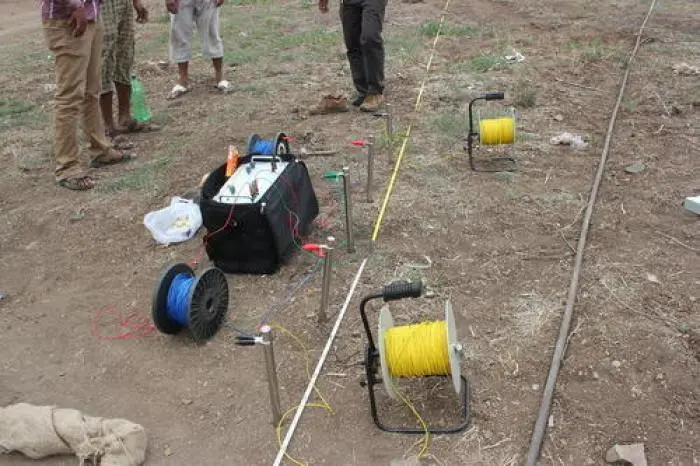
- Hydrogeological Survey — Before applying for permits, a hydrogeological survey is conducted to assess the groundwater potential, determine the optimal drilling location, and estimate the expected yield. This survey provides the technical data needed for the permit applications.
- WRA Permit Application — The application for a water abstraction permit is submitted to the WRA. This requires details of the intended drilling site, the expected depth, the estimated yield, and the purpose of abstraction. The WRA reviews the application and issues a permit if it is satisfied with the proposal.
- County Drilling Permit — If required by the county, a drilling permit application is submitted to the county government. This may involve submitting site plans, payment of fees, and obtaining county-level approval.
- EIA Process (if applicable) — For projects requiring an EIA, the process involves scoping, conducting an environmental impact assessment study, preparing an EIA report, and submitting it to NEMA. NEMA reviews the report, may request additional information, and issues an EIA license upon approval.
- Drilling and Construction — Once all permits are in hand, drilling can commence. The borehole is drilled, cased, and screened according to the approved design.
- Borehole Development and Testing — After drilling, the borehole is developed (cleaned) and subjected to pumping tests to determine its yield and hydraulic characteristics.
- Borehole Registration — Within 30 days of completion, the borehole must be registered with the WRA. This involves submitting a completion report, including drilling logs, test pumping data, and water quality analysis results.
- Installation of Flow Meter and Monitoring — As a condition of the permit, a flow meter must be installed to measure abstraction volumes. Annual returns must be submitted to the WRA, and water quality testing may be required periodically.
The entire process typically takes 4–8 weeks, depending on the complexity of the project and the responsiveness of the regulatory authorities. WaterLink Limited accelerates this process through our established relationships and thorough documentation.
WaterLink Efficiency: Our dedicated compliance team handles all permit applications in parallel, saving you weeks of delay. We have a track record of securing permits in the shortest possible time.
Environmental Impact Assessment (EIA) Requirements
An Environmental Impact Assessment (EIA) is a systematic process to identify, predict, and evaluate the potential environmental impacts of a proposed project. Under the Environmental Management and Coordination Act (EMCA) and the Water Act 2016, certain borehole projects must undergo an EIA before they can be approved.
When is an EIA required?
- Abstraction rate exceeds 50 m³/day (approximately 50,000 litres per day).
- The borehole is intended for commercial or industrial use.
- The borehole is located in an environmentally sensitive area (e.g., near a wetland, forest, or water body).
- The project is likely to have significant environmental impacts (as determined by NEMA).
The EIA Process:
- Scoping — Identify the key environmental issues to be assessed.
- Study and Data Collection — Gather baseline data on the environment, consult stakeholders, and assess potential impacts.
- Report Preparation — Prepare a comprehensive EIA report that describes the project, the existing environment, the potential impacts, and proposed mitigation measures.
- Submission and Review — Submit the EIA report to NEMA for review. NEMA may request additional information or public hearings.
- Licensing — If NEMA is satisfied, it issues an EIA license, which sets out conditions for the project.
The cost and duration of an EIA vary significantly depending on the project's scale and location. For a typical commercial borehole, the EIA process may cost KES 50,000–200,000 and take 2–4 months. WaterLink Limited partners with accredited environmental experts to conduct EIA studies efficiently.
WaterLink Insight: For most domestic boreholes (under 50 m³/day), an EIA is not required, simplifying the regulatory process. However, we always advise clients on whether an EIA is necessary and handle the entire process if it is.
County Government Regulations and Bylaws
Under Kenya's devolved system, county governments have the authority to enact legislation and bylaws governing water services and groundwater extraction within their jurisdiction. This means that requirements can vary significantly from one county to another.
Common county-level requirements include:
- Drilling Permits — Some counties require a specific drilling permit before any drilling activity begins. This may involve submitting a site plan, paying a fee, and obtaining county approval.
- Construction Standards — Counties may prescribe minimum construction standards for boreholes, including casing materials, sanitary seals, and grouting requirements.
- Inspection — County officers may inspect boreholes during construction to ensure compliance with bylaws.
- Registration — Some counties require boreholes to be registered with the county government, in addition to WRA registration.
- Abstraction Fees — Counties may levy additional fees on water abstraction, over and above those charged by the WRA.
For example, in Nairobi County, the Water Services and Sanitation By-laws require borehole owners to obtain a permit from the County and to ensure that the borehole is constructed in accordance with approved standards. In Kiambu County, similar requirements exist, with specific provisions for agricultural and commercial boreholes.
WaterLink Limited is familiar with the regulations in all major counties and handles the necessary county-level approvals as part of our comprehensive service. We ensure that your borehole is fully compliant at both national and county levels.
| County | Drilling Permit Required? | Approximate Cost (KES) | Typical Conditions |
|---|---|---|---|
| Nairobi | Yes | 5,000 – 15,000 | Site plan, compliance with construction standards |
| Kiambu | Yes | 5,000 – 10,000 | Agricultural use permits, water quality testing |
| Kajiado | Yes | 5,000 – 12,000 | May require EIA for large irrigation projects |
| Machakos | Varies | 3,000 – 10,000 | Inspection during drilling |
| Mombasa | Yes | 10,000 – 25,000 | Coastal aquifer protection, saline intrusion monitoring |
Note: These are indicative costs and may change. Always verify current requirements with the respective county government.
Ongoing Compliance: Monitoring, Reporting, and Fees
Once your borehole is operational, you must comply with ongoing regulatory obligations to maintain your permits and avoid penalties.
- Abstraction Monitoring — You must install a flow meter (as required by the WRA) and keep accurate records of the volume of water abstracted. The WRA may inspect the meter at any time.
- Annual Returns — You are required to submit annual returns to the WRA, reporting the total volume of water abstracted during the year. This is typically due by 31 January of the following year.
- Water Quality Testing — Depending on your permit conditions, you may be required to test the water quality at regular intervals (e.g., annually) and submit results to the WRA. This ensures that the water quality meets the intended use standards and that there is no contamination.
- Permit Renewal — Water abstraction permits are typically valid for 5 years. You must apply for renewal before the expiry date, paying the applicable fees.
- Payment of Abstraction Fees — You must pay annual abstraction fees to the WRA. The amount is based on the volume of water abstracted and the purpose of use. Fees are reviewed periodically.
- Maintenance of the Borehole — You are responsible for maintaining the borehole in good condition, preventing pollution, and ensuring that it does not pose a risk to public health or the environment.
WaterLink Service: We offer ongoing compliance support, including flow meter installation, annual return preparation, water quality testing, and permit renewal assistance. Our comprehensive maintenance packages keep you compliant year after year.
Failure to comply with these requirements can result in fines, suspension of your permit, or legal action. WaterLink Limited helps you stay on top of these obligations so you can focus on using your water supply.
Penalties for Non-Compliance
The Water Act 2016 and the Environmental Management and Coordination Act impose strict penalties for non-compliance. These are designed to deter illegal abstraction and protect Kenya's water resources.
| Offense | Penalty | Notes |
|---|---|---|
| Drilling without a permit | Fine up to KES 1,000,000 and/or imprisonment up to 2 years | Borehole may be sealed or confiscated |
| Abstraction beyond permitted volume | Fine of KES 500,000 – 1,000,000 | Permit may be suspended or revoked |
| Failure to submit annual returns | Fine of KES 100,000 – 500,000 | Renewal may be delayed |
| Non-compliance with EIA conditions | Fine up to KES 2,000,000 and/or imprisonment | Project may be stopped |
| Pollution of water resources | Fine up to KES 5,000,000 and/or imprisonment up to 10 years | Restoration costs may also be imposed |
| Failure to register borehole | Fine of KES 50,000 – 200,000 | Registration still required |
Warning: The penalties are severe and are actively enforced by WRA, NEMA, and county governments. WaterLink Limited ensures that every borehole we drill is fully compliant from start to finish, protecting you from these risks.
In addition to fines, non-compliance can lead to reputational damage, delays, and additional costs to rectify violations. It is far cheaper and easier to obtain the correct permits and adhere to regulations from the outset.
How WaterLink Limited Ensures Full Compliance
WaterLink Limited has been operating in Kenya for over 30 years, and we understand the regulatory landscape intimately. Our commitment to compliance is one of the reasons our clients trust us. Here is how we ensure your borehole is fully compliant:
- Expert Regulatory Team — We have a dedicated team that specialises in permit applications, liaising with WRA, NEMA, and county governments. They stay up-to-date with changing regulations and ensure all applications are correct and complete.
- Comprehensive Documentation — We prepare all required technical documentation, including hydrogeological reports, drilling logs, and water quality analyses, meeting the stringent requirements of the regulatory bodies.
- End-to-End Service — We handle every step from the initial survey to the final registration, ensuring no permit is missed. Our clients receive a fully documented borehole with all permits in place.
- Transparent Fee Structure — We provide a clear breakdown of all regulatory fees, so there are no surprises. We also help you budget for ongoing compliance costs.
- Ongoing Support — Even after the borehole is completed, we offer compliance monitoring services, including flow meter installation, annual return submission, and permit renewal assistance.
- Track Record — Over 1,150 successful boreholes, all fully compliant with Kenyan law. Our 98% success rate reflects our technical and regulatory expertise.
Ready to drill a compliant borehole? Contact WaterLink Limited today for a free consultation. We'll guide you through the regulatory maze and ensure your borehole is fully legal and operational.
With WaterLink Limited, you can have peace of mind knowing that your borehole is not only technically excellent but also fully compliant with the Water Act 2016 and all other relevant regulations. We are your trusted partner in legal and sustainable water supply.