Understanding Seasonal Yield Variations
Kenya's climate is characterised by two rainy seasons (March–May and October–December) and two dry seasons. These rainfall patterns directly influence groundwater levels, which in turn affect borehole yield. Yield — the volume of water a borehole can produce per unit time — is not constant throughout the year. Understanding these variations is crucial for water management, especially for homeowners, farmers, and businesses that rely on boreholes.
During the wet seasons, rainfall infiltrates the ground, recharging aquifers. This raises the water table, increases saturated thickness, and can significantly boost borehole yield. Conversely, during dry spells, water tables decline, and yield may drop substantially. The extent of variation depends on several factors, including aquifer type, borehole depth, and local geology.
Key Insight: Yield reductions of 20–50% are common in Kenya during prolonged dry spells. In some shallow boreholes, the drop can exceed 70%, while deep boreholes in fractured rock may experience declines of only 10–30%.
Factors That Influence Seasonal Yield Changes
Several factors determine how much a borehole's yield varies seasonally:
- Aquifer type — Unconfined aquifers (shallow, water-table) are more sensitive to seasonal rainfall than confined aquifers (deep, under pressure). Fractured rock aquifers can show moderate variability.
- Borehole depth and screen placement — Deeper boreholes that tap lower portions of an aquifer are less affected by seasonal water table fluctuations than shallow ones.
- Geological setting — Areas with thick weathered zones and low permeability (e.g., many parts of central Kenya) experience larger yield drops during dry seasons.
- Recharge rate — The speed and volume of recharge from rainfall influence how quickly yield recovers after rains.
- Abstraction rate — Over-pumping can deplete local groundwater faster than natural recharge can replenish it, exacerbating seasonal declines.
- Well development and maintenance — Poorly developed or clogged wells show more pronounced yield reductions as the water level drops.
Understanding these factors allows borehole owners to anticipate changes and plan accordingly.
Regional Patterns in Kenya
Kenya's diverse geography and climate result in different seasonal yield behaviours across the country. Here is a summary of typical patterns:
| Region | Typical Yield Variation | Primary Aquifer Type | Seasonal Notes |
|---|---|---|---|
| Nairobi & Central Highlands | 15–35% drop in dry season | Fractured volcanic rock | Two rainy seasons; moderate variability; deep boreholes more stable |
| Rift Valley | 20–40% drop | Fractured rock & sedimentary | Affected by lake levels; some areas have high recharge |
| Coast (Mombasa, Malindi) | 10–25% drop | Sedimentary (sandstone, coral) | More stable due to larger aquifer storage and consistent rainfall |
| Eastern & North-Eastern (arid) | 40–70% drop | Shallow weathered zone / basement | Extreme variation; boreholes often dry up in severe droughts |
| Lake Victoria Basin | 15–30% drop | Sedimentary & weathered | Reliable rainfall, but high evapotranspiration affects recharge |
These are general trends; site-specific conditions can produce different results. A proper hydrogeological study is essential for understanding yield behaviour on your property.
How to Monitor and Manage Seasonal Yield
Proactive monitoring helps you anticipate changes and avoid water shortages. Here are the key practices:
- Regular yield testing — Conduct pumping tests at least twice a year: once at the end of the rainy season (to know your peak yield) and once at the end of the dry season (to know your minimum).
- Water level monitoring — Install a dip meter or a pressure transducer to track static water levels. A drop of more than 2–3 metres over a short period may indicate over-extraction or seasonal decline.
- Flow measurement — Install a flow meter on the discharge line to monitor production in real-time. This helps detect sudden drops that may indicate pump problems or aquifer stress.
- Record keeping — Maintain a log of yield, water levels, and pumping hours. Over time, this data reveals long-term trends and helps you plan for dry seasons.
- Engage professionals — Annual inspections by a qualified team like WaterLink Limited can catch issues early and ensure optimal performance.
WaterLink Recommendation: We provide full monitoring services, including digital water level loggers and remote telemetry, so you can track your borehole's performance from anywhere.
Practical Strategies to Mitigate Dry Season Declines
While you cannot control the weather, you can take steps to reduce the impact of seasonal yield drops:
- Reduce pumping rates — Pumping at a lower rate during dry periods can prevent excessive drawdown and preserve the aquifer.
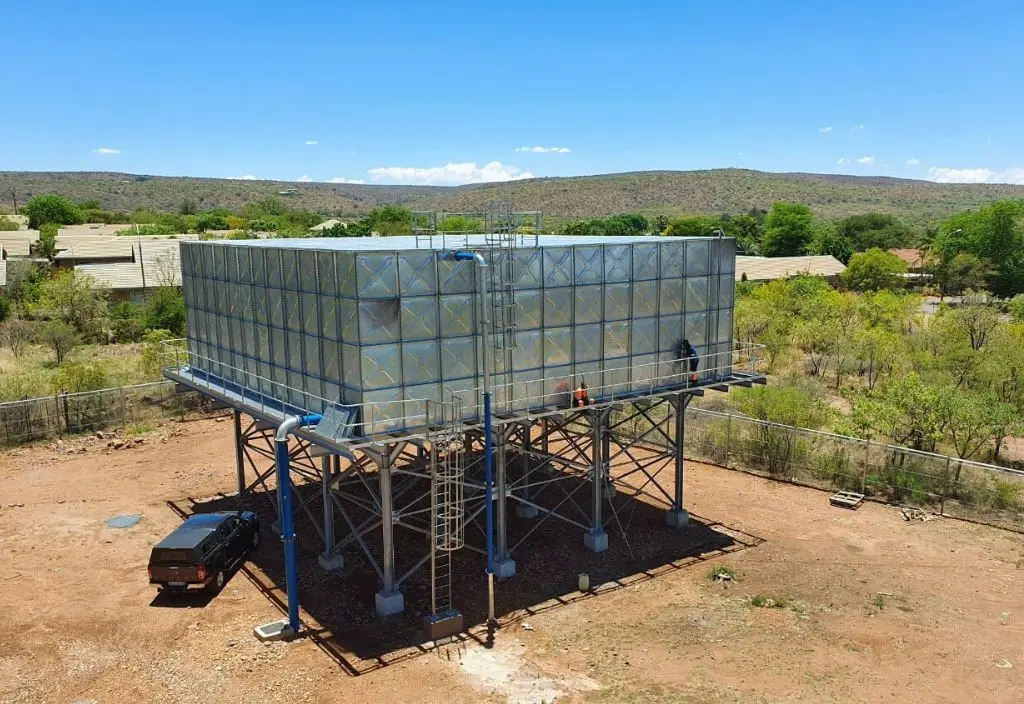
- Install a storage tank — A large storage tank (e.g., 10,000–50,000 litres) allows you to pump during off-peak hours and store water for peak demand, reducing stress on the borehole.
- Implement water conservation — Use drip irrigation, fix leaks, and promote water-saving habits in your household or business.
- Consider rainwater harvesting — Supplement your borehole with rainwater to reduce dependency during dry spells.
- Recharge enhancement — Where feasible, implement artificial recharge techniques (e.g., recharge pits, check dams) to increase groundwater recharge during rains.
- Regular maintenance — Keep your pump and screen in good condition; a clogged screen or worn pump will worsen yield issues.
- Diversify water sources — If possible, have multiple water sources (e.g., a backup borehole or municipal connection) to cover critical needs.
By combining these strategies, you can maintain a reliable water supply even during the harshest dry seasons.
Long-Term Trends: Climate Change and Groundwater
Climate change is altering rainfall patterns in Kenya, with more intense dry spells and unpredictable rainy seasons. These changes are already affecting groundwater recharge and borehole yields. Recent studies indicate that:
- Many aquifers are not fully recharging, leading to a long-term decline in water tables.
- Extended droughts are becoming more frequent, causing deeper yield reductions.
- Seasonal variability is increasing, making it harder to predict borehole performance.
To adapt, borehole owners need to:
- Invest in deeper boreholes or alternative aquifer sources.
- Adopt more efficient water use technologies.
- Consider solar pumping to reduce energy costs and ensure operation even during grid outages.
- Regularly update hydrogeological assessments to understand changing conditions.
At WaterLink Limited, we are at the forefront of climate-resilient borehole design, helping clients prepare for a changing future.
WaterLink Limited's Approach to Yield Management
With over 30 years of experience, WaterLink Limited has developed a comprehensive approach to managing seasonal yield variations for our clients:
- Detailed hydrogeological studies — We assess aquifer characteristics, recharge potential, and seasonal behaviour before drilling.
- Optimal borehole design — We select the right depth, screen placement, and filter pack to maximise yield stability.
- Professional monitoring — We offer annual yield testing, water level monitoring, and performance analysis.
- Maintenance and rehabilitation — We keep your borehole in peak condition to withstand seasonal stress.
- Custom advice — We provide tailored recommendations for storage, pumping schedules, and conservation to suit your specific property and usage.
- Climate adaptation strategies — We help you future-proof your water supply against changing weather patterns.
By choosing WaterLink Limited, you gain a partner who understands Kenya's groundwater dynamics and is committed to ensuring your water security year-round.
Need help managing your borehole yield? Contact WaterLink Limited today for a professional assessment and tailored solutions.