Why Industrial Area is a Prime Borehole Location
Nairobi's Industrial Area is the economic heartbeat of Kenya's manufacturing sector. Home to thousands of factories, warehouses, and processing plants, the demand for reliable, cost-effective water sources has never been higher. Businesses are increasingly turning to boreholes to escape skyrocketing municipal water costs and ensure uninterrupted production.
Hiring the wrong borehole drilling contractor for your Industrial Area property could cost you millions of shillings, delay your operations, or even lead to legal penalties. Before signing any contract, it's essential to verify that the company holds a valid Water Resources Authority (WRA) license. This guide helps you choose a licensed borehole drilling company for your industrial project and avoid costly mistakes.
At WaterLink Limited, a WRA licensed borehole drilling company with Class A status, we've completed numerous successful industrial borehole projects in the Industrial Area and surrounding zones. Our deep understanding of the region's geology—characterized by volcanic rock formations with excellent water-bearing potential—ensures a 98% success rate for our clients.
Industrial Area at a Glance: This economic powerhouse offers excellent groundwater potential. An industrial borehole can eliminate monthly water bills of KES 100,000-500,000+, with payback periods as short as 18-24 months.
Understanding Industrial Area's Geology and Aquifers
The Industrial Area sits on the same volcanic geological formations that characterize much of Nairobi. These formations offer excellent groundwater potential:
Geological Formations
- Volcanic Basalts: The predominant rock type in the area. These formations are highly fractured, providing excellent water storage and transmission pathways.
- Weathered Volcanic Rock: The upper layers consist of weathered basalt that can be easier to drill through, but may require casing to stabilize the hole.
- Nairobi Stone: The iconic hard volcanic rock that characterizes the region, offering excellent water-bearing potential in its fracture zones.
Aquifer Characteristics
- Depth Range: 120-200 meters depending on the exact location and geological formation.
- Typical Yield: 8-25m³/hr for industrial applications.
- Water Quality: Generally good, though some areas may have elevated iron, hardness, or salinity levels.
Hydrogeological Insight: Industrial Area's volcanic formations create excellent groundwater reservoirs. Professional surveying is essential to locate the most productive fracture zones for optimal yield.
Borehole Depths and Yields by Location
Different areas within the Industrial Zone have varying groundwater potential. Here's a detailed breakdown:
| Location | Typical Depth (m) | Typical Yield (m³/hr) | Water Quality | Primary Use |
|---|---|---|---|---|
| Industrial Area Central | 140 – 200 | 10 – 25 | Good, some salinity | Manufacturing / Processing |
| Enterprise Road | 130 – 190 | 8 – 20 | Good, moderate hardness | Manufacturing / Warehousing |
| Mombasa Road Area | 120 – 180 | 8 – 18 | Good | Warehousing / Logistics |
| Shimanzi / General Waruinge | 130 – 190 | 8 – 22 | Good, some iron | Manufacturing |
Note: These are typical ranges. Individual results vary based on exact location and geological conditions.
WaterLink Advantage: Our hydrogeological surveys identify the optimal drilling location and expected yield before any drilling begins, ensuring the highest success rate for your industrial project.
Cost of Borehole Drilling in Industrial Area
The cost of drilling an industrial borehole in the Industrial Area depends on depth, geology, and system requirements. Here's a comprehensive breakdown:
Complete Cost Breakdown for Industrial Installation
| Component | Estimated Cost (KES) |
|---|---|
| Hydrogeological Survey | 80,000 – 150,000 |
| WRA & NEMA Permits | 80,000 – 200,000 |
| Drilling (120-200m) | 800,000 – 1,500,000 |
| Casing and Screen | 120,000 – 250,000 |
| Test Pumping | 120,000 – 200,000 |
| High-Capacity Pump & Installation | 300,000 – 800,000 |
| Storage & Distribution System | 300,000 – 1,000,000 |
| Total Approximate | 1,800,000 – 4,100,000 |
Note: Costs vary based on specific site conditions, depth, and system complexity.
Industrial ROI: An industrial borehole typically pays for itself in 18-36 months through eliminated water bills and increased operational reliability.
Industrial Borehole Solutions for Factories & Businesses
Industrial facilities have unique water requirements that demand specialized solutions:
Industrial Water Demands
- Manufacturing Plants: 10-50m³/hr for production, cooling, and sanitation.
- Food Processing: High-quality water for production, often requiring treatment.
- Logistics Warehouses: 5-20m³/hr for facilities, sanitation, and fire suppression.
- Beverage Production: Very high-quality water with specific mineral profiles.
Key Design Considerations for Industrial Boreholes
- High-Capacity Pumps: Industrial systems require pumps capable of delivering consistent flow for 24/7 operations.
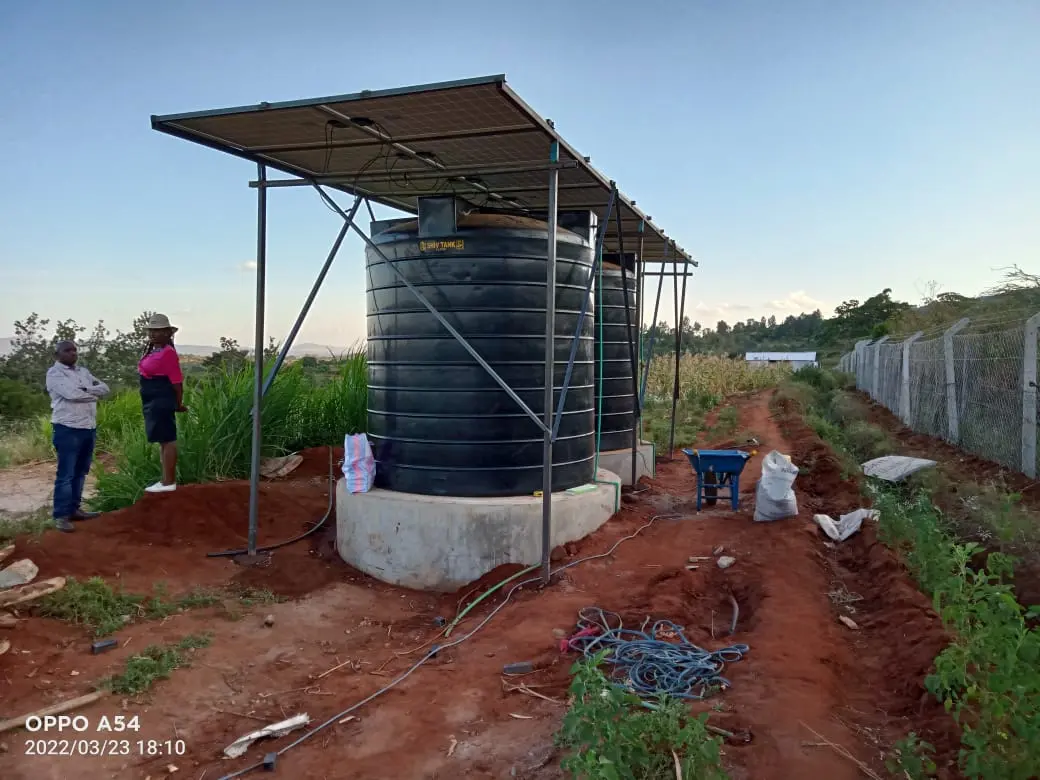
- Backup Systems: Generator or solar backup ensures uninterrupted water supply for industrial operations.
- Water Treatment: Many industrial applications require specific water quality standards (RO, filtration, UV).
- Storage Capacity: 100,000L+ storage ensures buffer for peak demand and emergencies.
- VFD Technology: Variable Frequency Drives for constant pressure and energy efficiency.
Industrial Advantage: An industrial borehole eliminates reliance on municipal water, protects against rationing, and provides a significant competitive advantage through operational certainty.
Permits and Legal Compliance in Nairobi
Industrial borehole drilling requires adherence to national and Nairobi City County regulations:
- WRA Water Permit for Construction: Mandatory before drilling. Industrial projects require detailed abstraction plans.
- NEMA Environmental Impact Assessment: Required for all industrial boreholes. Full EIA with public participation may be required.
- Nairobi City County Approvals: Additional permits for industrial water abstraction and discharge.
- Water Use Permit: Required after drilling for ongoing abstraction, with specific industrial abstraction limits.
WaterLink Limited handles all permit applications for our industrial clients, ensuring a smooth and compliant process.
Useful Authority Links
Water Quality Considerations for Industrial Use
Industrial applications often require specific water quality standards. Here's what to expect and how to address potential issues:
Common Water Quality Issues in Industrial Area
- Salinity: Some areas may have elevated salt levels affecting certain manufacturing processes.
- Iron: Volcanic formations can release iron into groundwater, affecting product quality.
- Hardness: Can cause scaling in boilers and cooling systems.
- Turbidity: Seasonal variations can affect water clarity.
Industrial Treatment Solutions
- Reverse Osmosis: For high-purity water requirements (food, beverage, electronics).
- Iron Filters: Oxidation filters for iron and manganese removal.
- Water Softeners: For boiler feed water and cooling systems.
- UV Sterilization: For bacterial control in food and beverage applications.
WaterLink Approach: We provide comprehensive water quality testing and treatment solutions tailored to your specific industrial requirements.
Success Stories from WaterLink Limited
🏭 Industrial Area Manufacturing Borehole
- Location: Industrial Area Central
- Depth: 180 meters
- Yield: 22m³/hr
- Solution: High-capacity pump with VFD, 100,000L storage, and iron filtration system
- Result: Eliminated KES 350,000 monthly water bills, payback in 22 months
- ⭐ Success rate: 100%
🏢 Enterprise Road Warehouse Borehole
- Location: Enterprise Road
- Depth: 160 meters
- Yield: 15m³/hr
- Solution: High-capacity system with UV treatment and 50,000L storage
- Result: Uninterrupted water supply, improved fire suppression capability
- ⭐ Success rate: 100%
🍽️ Food Processing Plant Borehole
- Location: Mombasa Road Area
- Depth: 170 meters
- Yield: 20m³/hr
- Solution: Complete system with RO treatment for food-grade water
- Result: Product quality improved, eliminated KES 200,000 monthly water bills
- ⭐ Success rate: 100%
Client Feedback: "WaterLink Limited's industrial borehole solution has been transformative for our manufacturing plant. The water quality and reliability have exceeded our expectations, and the ROI has been exceptional." — John K., Factory Manager, Industrial Area
Choosing the Right Drilling Contractor in Industrial Area
With the growing demand for boreholes in the Industrial Area, many contractors have entered the market. Here's how to choose the right one for your industrial project:
- Industrial Experience: Choose a contractor with a proven track record in industrial boreholes.
- Equipment: Ensure they have both DTH and mud-rotary rigs to handle the area's volcanic geology.
- Licensing: Verify WRA, NEMA, and NCA licenses.
- References: Ask for past industrial client references in the area.
- Transparency: Get an itemized quote with all costs clearly listed.
- Guarantee: Look for a contractor who stands behind their work.
WaterLink Advantage: With numerous successful industrial projects in the Industrial Area, we have the local knowledge, equipment, and expertise to deliver reliable water solutions for your business.